



THE TRUTH BATCH · 01
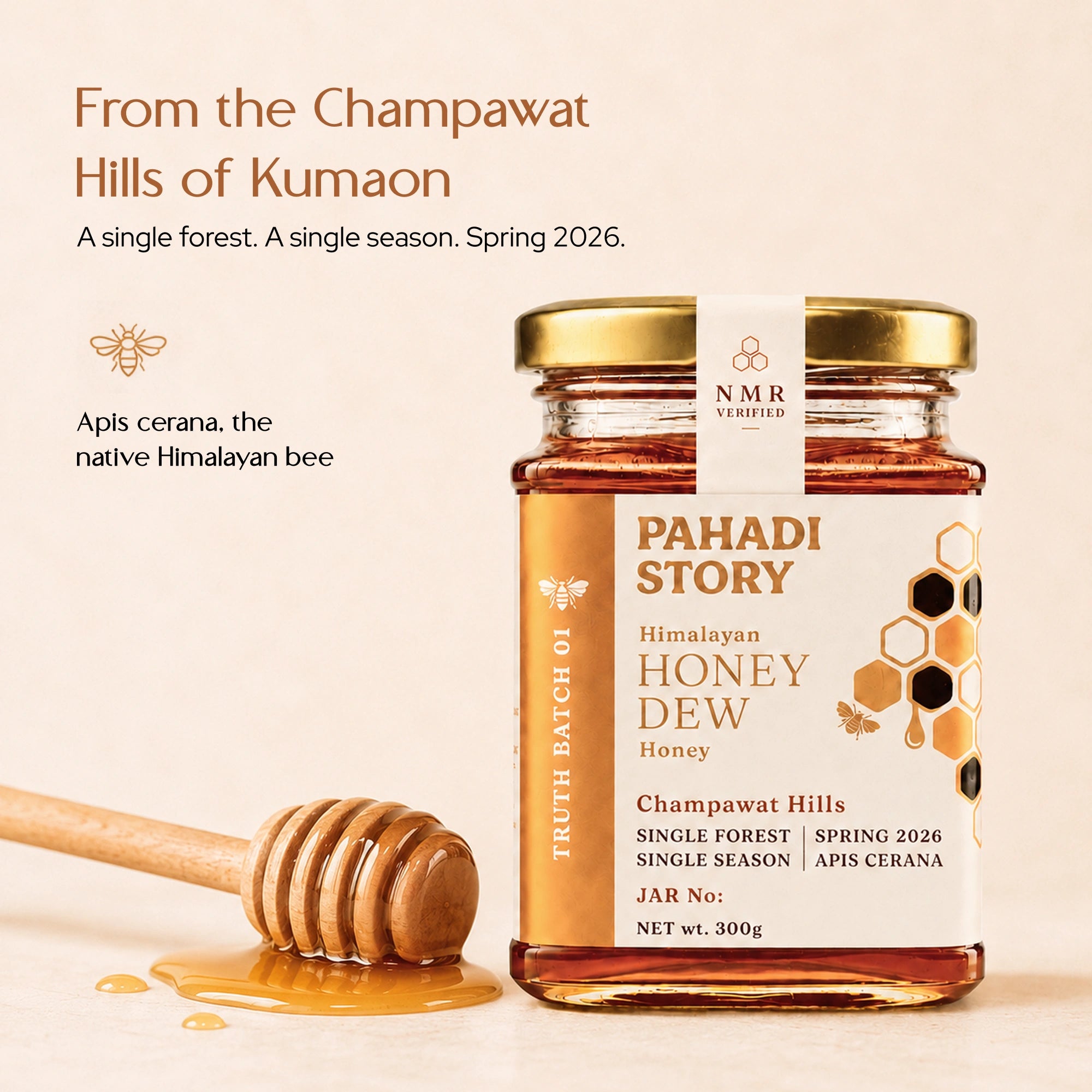
Himalayan Honeydew Honey
Tested in India & Germany. Champawat ·Apis cerana indica· Single forest, single season · Spring 2026
THE SURPRISE
We didn't set out to make honeydew. The lab told us.
We sent this batch to Germany to find out whether our own honey could withstand scrutiny. The lab came back with something we hadn't expected: not a flower honey at all. The bees had gathered it from the forest canopy and this batch classified as honey dew, a far rarer honey most people never encounter. We didn't claim it. The lab found it. So we published the surprise instead of quietly correcting our assumption.
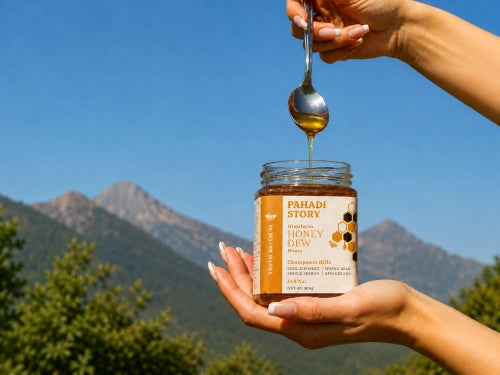
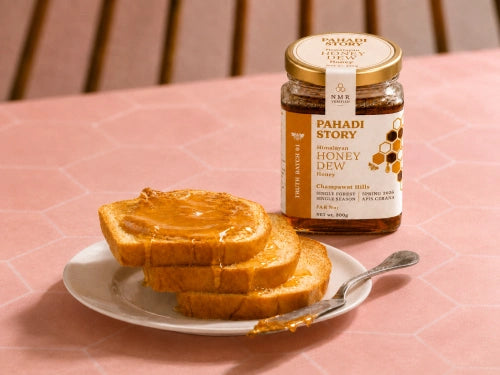
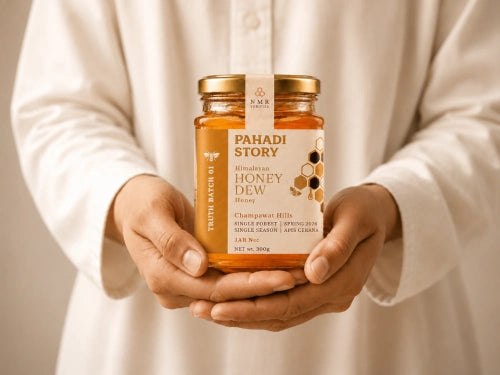
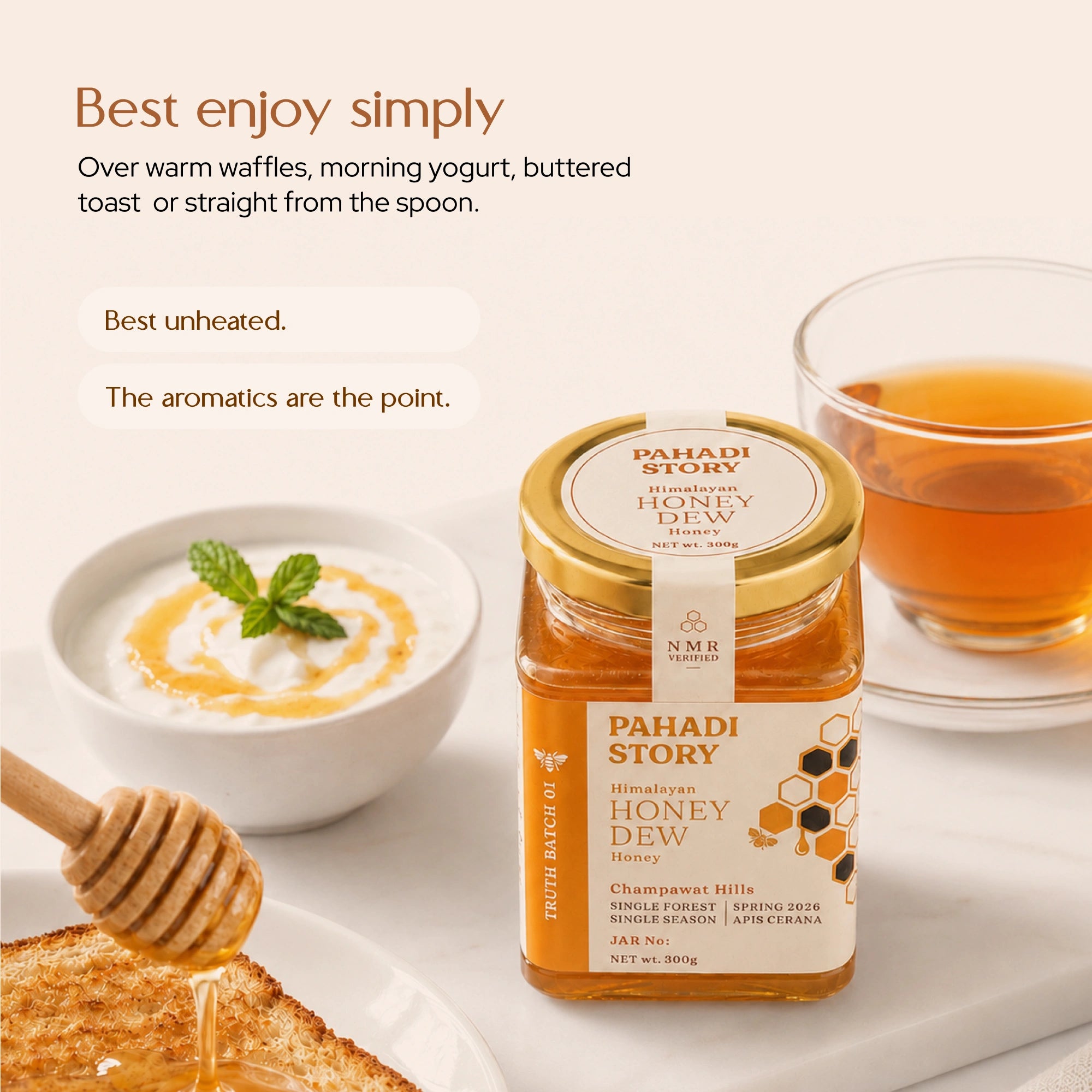
The honest way to meet a honeydew for the first time.
Stir into warm water.
Never boiling water or tea.
Curd, cheese, dark bread, a good cheeseboard.
Proven, not promised.
Our own German report says this honey is "not consistent" with its India reference group — 0.0% probability. We're publishing that, not hiding it. Here's why: NMR origin models compare a sample against reference databases built largely from mainstream, commercial honeys. A single-forest, high-altitude Himalayan honeydew won't match a database of plains blossom honey. It doesn't mean the honey isn't Indian — it means it isn't ordinary. We could have quietly left this page out. Leading with it is the entire point.
Who stands behind this jar
Real people, real words.

"जंगल देता है, मधुमक्खी बनाती है। हम बस ईमानदारी से उठाते हैं।"
(The forest gives, the bee makes. We only carry it honestly.)"
Hairsh Ji
Bee Keeping Expert

"A claim you can't check is just an adjective. Every brand says the right words. The only thing that separates us is that you can open our reports."
Pravin Shah
Founder, The Pahadi Story

"What isn't proven doesn't go on the label"
Prachi Purwar
Food Technologist
We tested for truth,
not just compliance
| Standard compliance testing | What we also did | |
|---|---|---|
| The question it asks |
"Is it legal to sell?" |
Is it actually what it claims to be? |
| What it measures |
Moisture, sugar ratios, basic adulteration checks |
Full NMR molecular profile — 35+ authenticity markers |
| Catches sophisticated adulteration? |
Can miss it |
Built precisely to catch it |
| Botanical & geographic origin |
Usually not assessed |
NMR classification + microscopic pollen analysis |
| Results shown to you |
Rarely published |
All three reports, one tap away |

Every jar empowers
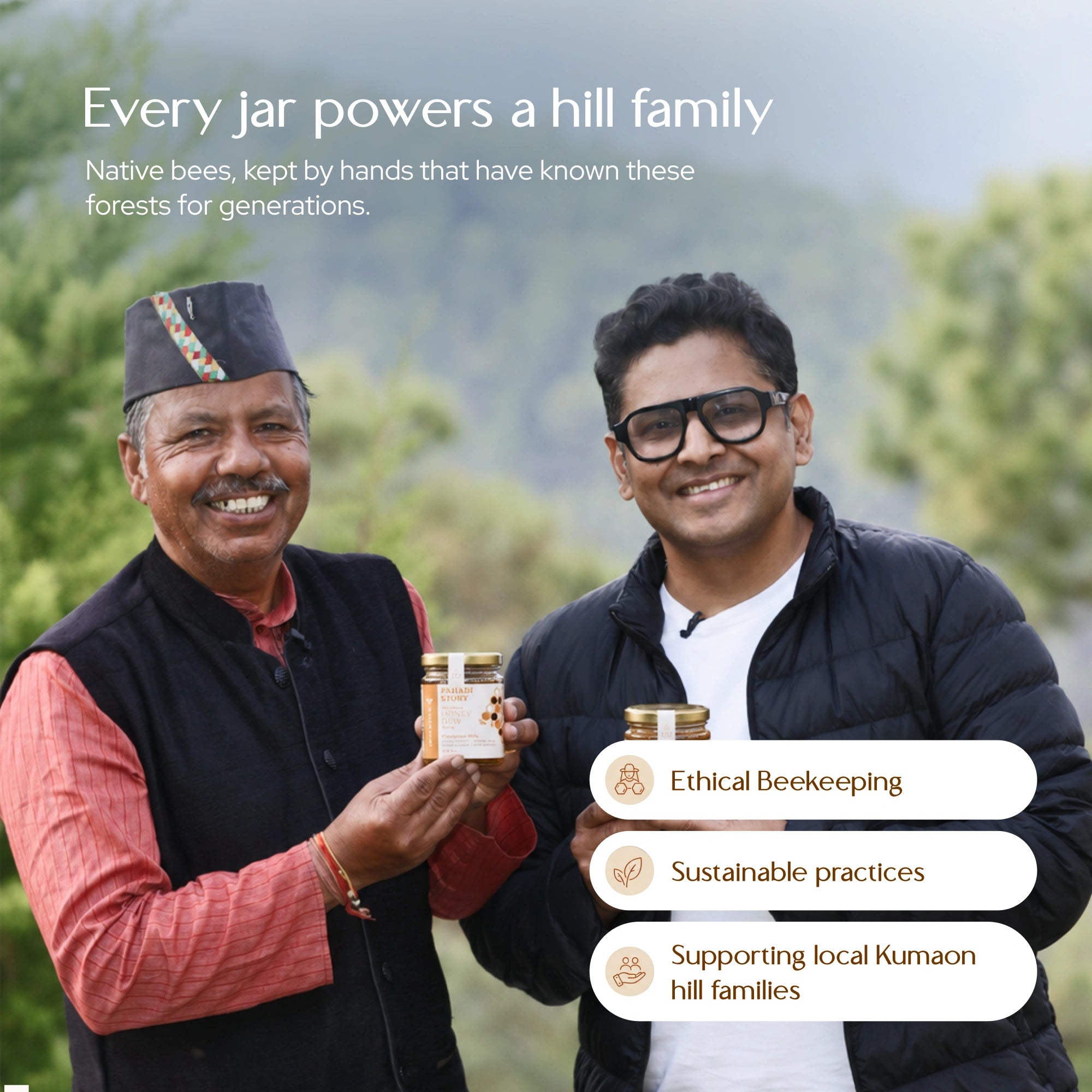
Native Apis cerana gives less honey than a managed commercial colony — but honey that belongs to its place. This batch supports Kumaon's hill families, harvested at the pace the forest allows.
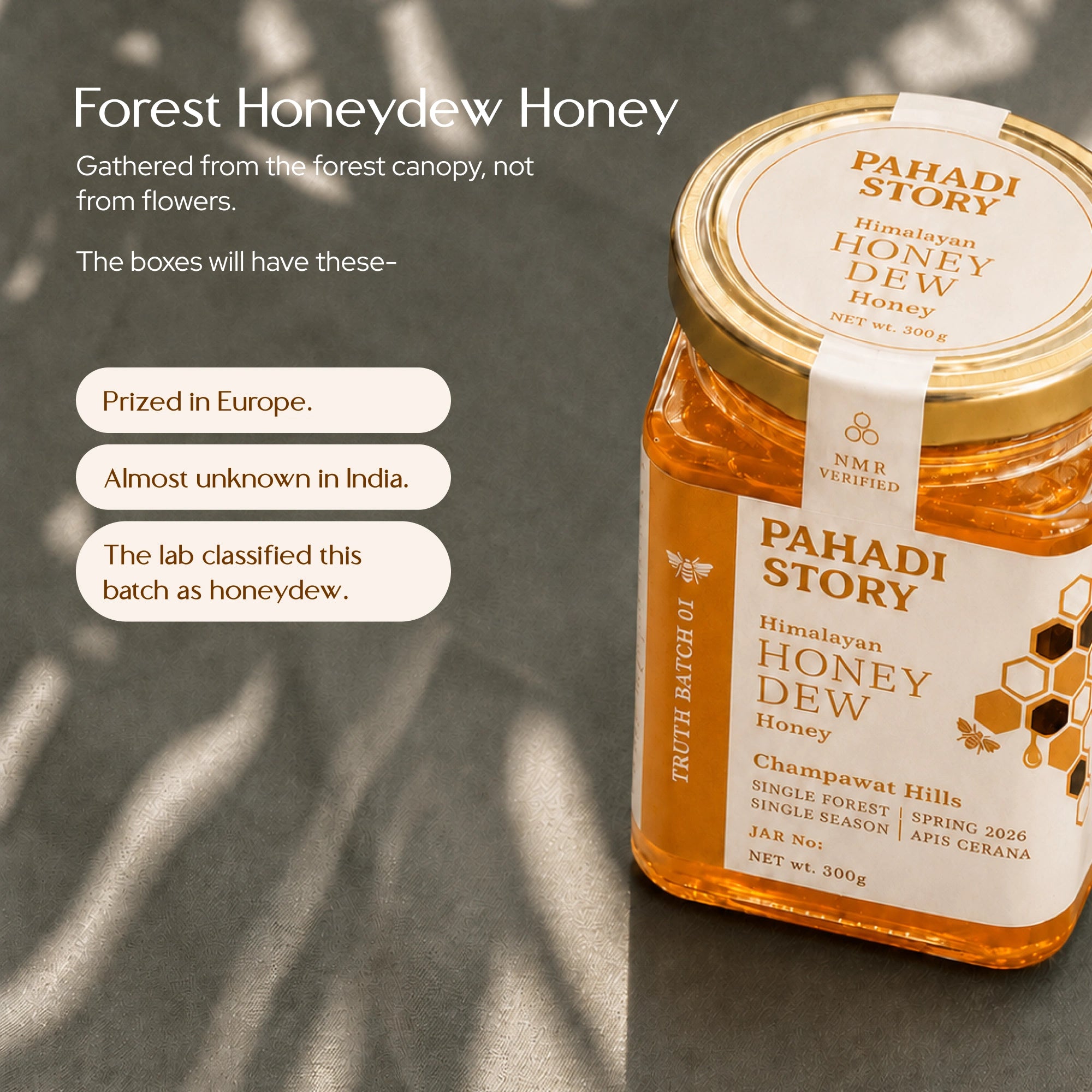
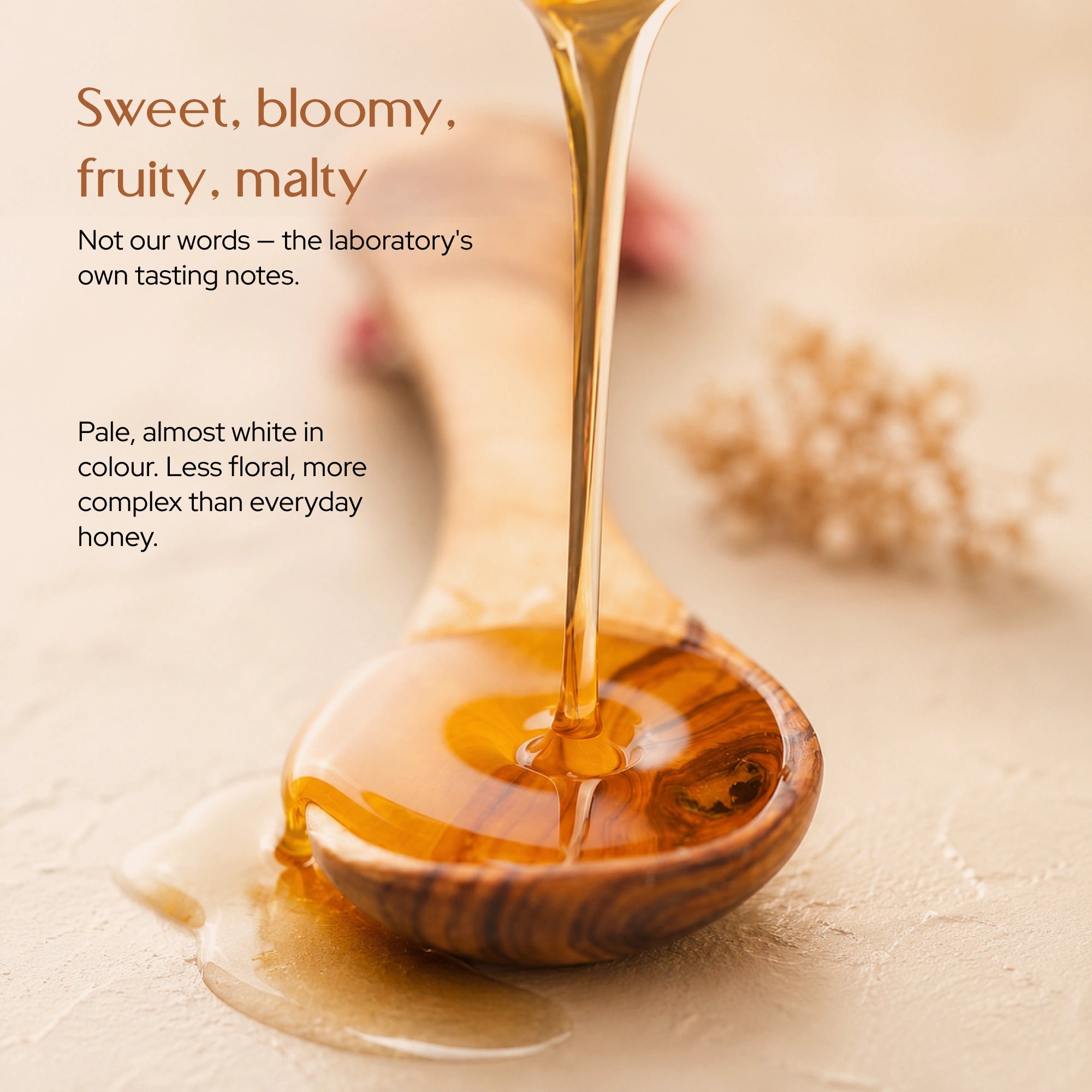
Most honey comes from flower nectar. Honeydew comes from the forest itself; bees gather it from the canopy rather than the blooms. It's far less common, and in Europe it's a category of its own, sold as forest or fir honey. It tends to be less floral and more complex, with a savoury, malty edge. The labs classified this batch as honeydew, and the pollen analysis independently confirmed it. We didn't set out to make honeyde, the lab told us that's what we had.
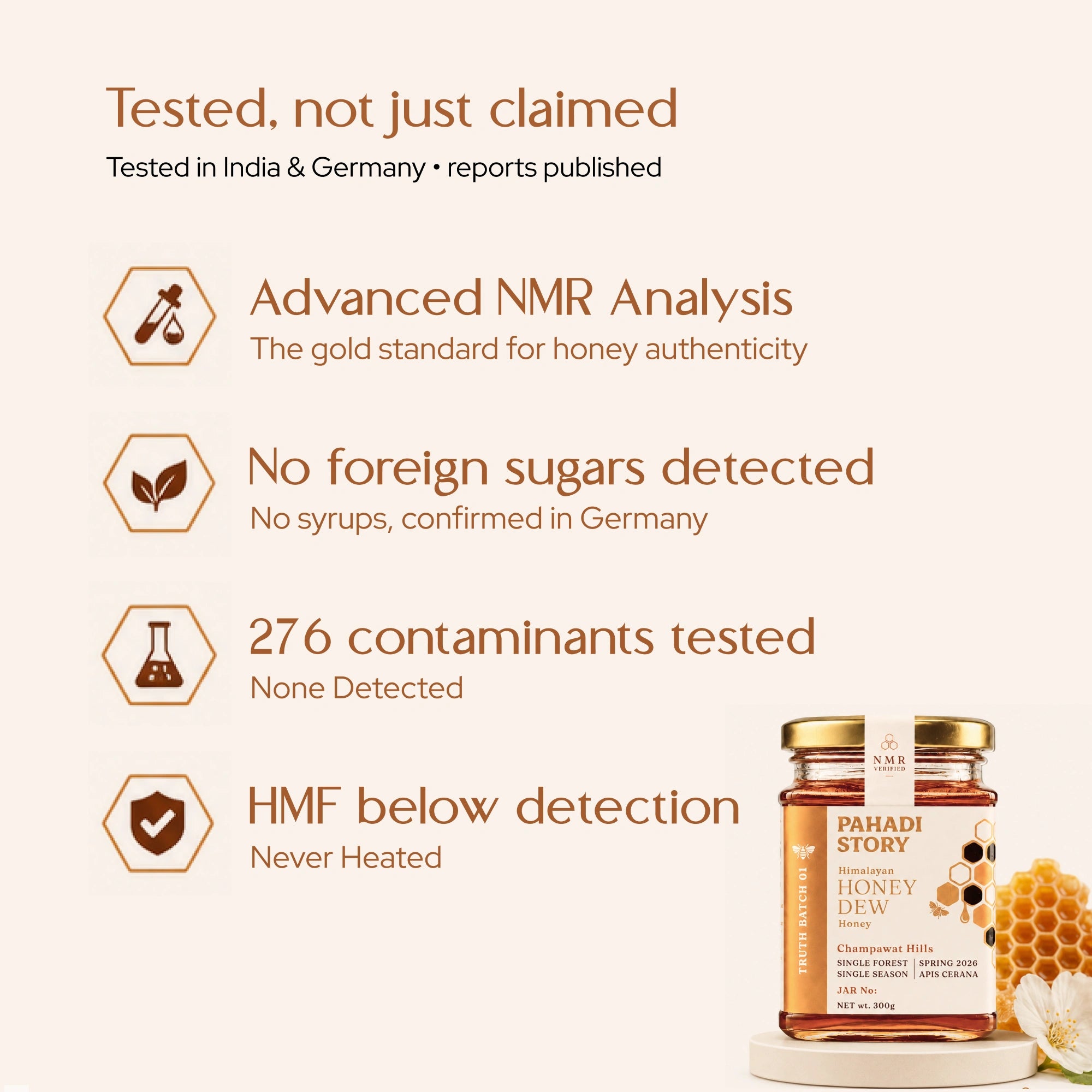
Most honey is tested for compliance such as moisture, sugar ratios, basic checks that answer "is this legal to sell?" NMR profiling answers a different question: "is this actually what it claims to be?" It reads the honey's full molecular fingerprint and compares it against a database of thousands of verified honeys, which is how it catches syrups engineered to slip past standard tests.
We went to Germany because that's where the method was developed and where the reference databases live. India handled the safety testing; Germany handled authenticity.
Because it does and we published it rather than hide it.
NMR origin models work by comparison. Our sample was checked against a reference set of Indian honeys, which is built largely from mainstream, commercial, plains-grown honey. A single-forest Himalayan honeydew doesn't look like that, so it read as atypical.
It doesn't mean the honey isn't Indian. It means it isn't ordinary. The pollen analysis found Schleichera (lac tree) as the dominant pollen — a South Asian forest species — though the lab noted origin can't be determined from pollen alone.
We could have left this result out. Publishing everything is the point.
500 is what one forest gave us in one season, after leaving the bees enough honey for their own winter. We didn't push the hives to reach a number.
There will be future batches, but they won't be this one. Different season, different forest conditions, different honey, the next batch may not even classify as honeydew. That's why every jar is numbered and every batch is tested and published separately.
That's crystallisation, and it's normal. Honey is a supersaturated sugar solution, and glucose gradually forms crystals cooler weather speeds it up. It's a physical change, not spoilage, and the honey is unchanged.
To bring it back, stand the sealed jar in a bowl of warm not hot — water for a while. Skip the microwave and boiling water: high heat is what damages the enzymes we worked hard to keep intact.
Not for babies under 12 months. Honey — all honey, including ours — can contain bacterial spores that an infant's gut isn't developed enough to handle, which can cause infant botulism. This is standard medical advice worldwide and has nothing to do with quality or testing.
After the first birthday, honey is fine. If you have any doubt about your child specifically, ask your paediatrician.
This product has no reviews yet.