


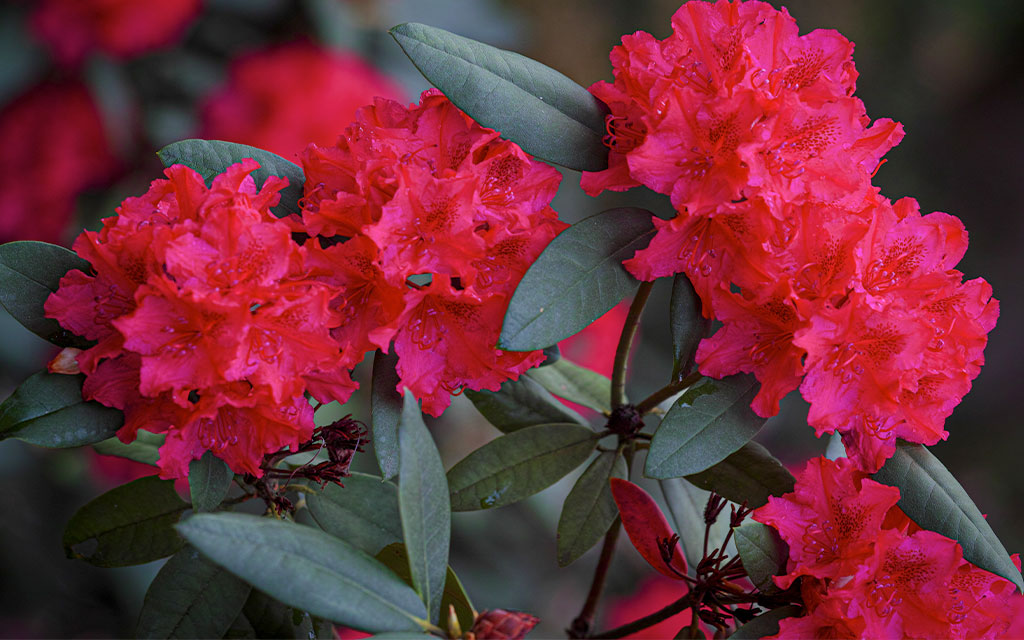
If you've ever driven up to Uttarakhand between March and April, you already know the flower before you know its name. The hillsides turn a deep, almost impossible shade of red, and every roadside dhaba suddenly has a jug of pink-red squash sitting next to the chai kettle. Ask anyone in the hills what it is, and they'll say one word: buransh.
Outside the hills, most people know it, if they know it at all, as rhododendron. But in Uttarakhand and Himachal, buransh isn't just a pretty flower that shows up on postcards. It's woven into local food, local medicine cabinets, and local folklore, in that order.
Here's what buransh actually is, where the name comes from, and what hill communities have traditionally used it for.
What is Buransh (Rhododendron)?
Buransh is the Hindi and Garhwali name for the tree most people outside the hills know as rhododendron. Botanically, it's Rhododendron arboreum, a member of the Ericaceae family, and it's the specific species behind the bright red flowers you'll see across Uttarakhand's mid and high-altitude forests. A second, less common species, Rhododendron campanulatum, grows higher up and produces white to pink flowers, though it's used far more cautiously since parts of the plant are considered unsafe for consumption.
The name itself has an interesting split origin. "Rhododendron" comes from the Greek rhodo (rose or red) and dendron (tree). "Buransh" is the local Pahadi name that predates any of that, and it's the one you'll actually hear used on the ground.
It's also a flower with serious official recognition. Buransh is the state tree of Uttarakhand, the state flower of Himachal Pradesh and Nagaland, and the national flower of Nepal, which tells you how deeply it's tied to Himalayan identity, not just Indian.
Where Buransh Grows and Its Regional Names
Buransh grows across the Himalayan belt, typically between 1,500 and 3,600 metres, which covers Uttarakhand, Himachal Pradesh, parts of Kashmir, Sikkim, and Nepal. Outside the main Himalayan range, smaller pockets also grow in the Nilgiri hills of South India.
Because it grows across so many regions and language groups, buransh goes by several names depending on where you are:
-
Hindi: Buransh, also called Sanjivani Phool ("the miracle flower") in local folklore
-
Garhwali/Kumaoni: Burans, Buras ka phool
-
Nepali: Guras, Lali gurans
-
Sanskrit: Varansh
-
Kashmiri: Chhan, Chiu
-
Bengali: Baras
-
English: Rhododendron, tree rhododendron
If you've searched for "buras ka phool," "burans flower," or "sanjivani phool" and landed here, they're all simply regional names for the same tree. The "sanjivani" tag comes from folklore that credits the flower with near-miraculous healing power, the kind of reputation that gets attached to a plant when generations of a community have relied on it.
1. It's Rich in Plant Antioxidants
The most well-documented thing about buransh is its antioxidant content. The flower contains flavonoids like quercetin and rutin, along with coumaric acid, compounds that have been studied for their role in protecting cells from oxidative stress. This is the same broad family of compounds found in foods like berries and green tea, and it's likely the biggest reason buransh has held onto its reputation as a "wellness flower" for so long.
2. Traditionally Used to Ease Everyday Discomfort
In Ayurvedic and folk practice, buransh petals have long been used in home remedies for common seasonal discomfort, mild headaches, congestion, and general aches. This isn't unique to buransh; a lot of Himalayan flora gets used this way, applied as a paste or brewed into a mild infusion rather than taken as a concentrated dose. It's worth being clear that this is traditional use, not a clinically established treatment, and it shouldn't replace medical care for anything persistent or serious.
3. A Natural Summer Cooler
This is the benefit locals will actually tell you about first. Buransh sharbat and squash are traditionally consumed during the hotter months specifically because of their cooling, hydrating effect on the body. It's a high-water-content drink that's genuinely refreshing, which is part of why you'll find it sold at almost every hill station stall between March and June. Ayurveda classifies it as a cooling substance, useful for managing body heat during summer.
4. Contains Iron, Supporting Everyday Energy
Buransh flowers contain a modest amount of iron along with other minerals like calcium and potassium. Iron plays a direct role in red blood cell production, which is part of why traditional use has linked buransh to easing general fatigue and weakness. It's not a substitute for treating diagnosed anaemia, which needs medical attention, but as part of a varied diet, it's a reasonable small contributor.
5. A Source of Vitamin C
Buransh squash typically contains a meaningful amount of Vitamin C, an antioxidant vitamin that supports immune function and skin health. This is also likely why buransh has a long-standing association with glowing skin in hill communities, Vitamin C plays a genuine role in collagen support, though a glass of squash alone won't dramatically change your skin on its own.
6. Traditionally Paired with Digestion
Older Ayurvedic texts mention buransh preparations being used to support appetite and ease minor stomach discomfort. This lines up with how it's traditionally served, often after a heavy meal, the same logic behind why many Indian households reach for a digestive drink post-lunch.
More Than a Health Drink, a Piece of Hill Culture
The six points above cover what's actually in the flower. But ask someone from Uttarakhand why buransh matters, and the answer usually isn't chemical at all. It's the flower that marks the turn of the season, the one tourists travel specifically to photograph in bloom, the one that shows up in local folk songs and village stories about longing and homecoming. Buransh season is a genuine cultural event in the hills, not just a harvest window, and that's a big part of why the flower is treated with as much reverence as it is, well beyond whatever's measurable in a lab.
How Buransh Juice and Squash Are Traditionally Made
Buransh isn't limited to one drink. Hill communities use the flower in several forms, and it helps to know the difference:
-
Buransh sharbat is the simplest version, fresh or dried petals simmered in water, strained, and lightly sweetened.
-
Buransh squash is a concentrated version, made the same way but reduced further and typically bottled with a sweetener for a longer shelf life.
-
Buransh syrup is similar to squash but reduced to a thicker consistency, often used a spoonful at a time stirred into water rather than poured generously.
-
Buransh chutney is a lesser-known but genuine regional preparation, petals cooked down with spices into a tangy side dish, more common in home kitchens than in shops.
-
Buransh juice is often used loosely to mean any of the diluted forms above.
The traditional method: petals are washed and simmered gently in water until the liquid turns a deep pink-red, then strained and sweetened to taste, usually with sugar, jaggery, or honey. It's rarely drunk concentrated, most households dilute it generously with cold water before serving.
What about buransh tea? This is a slightly different preparation from sharbat or squash. Rather than simmering fresh petals, dried buransh is steeped the way you'd steep any herbal tea, which preserves more of the delicate floral character and antioxidant content without added sugar. It's a gentler, less sweet way to get the same flavonoids described above, and it's the form we use in our own blends.
If you'd rather skip the boiling and straining, our Buransh Kahwa Tea and Buransh Iced Tea, part of our Satva Vital ritual set, use the same Himalayan rhododendron in a ready-to-brew format, paired with hibiscus and rose for a fuller floral profile.
Buransh Side Effects and Who Should Be Careful
Buransh is generally well tolerated when consumed the traditional way, diluted, and in moderate amounts. That said, a few things are worth knowing:
-
Stick to petals, not leaves or bark, unless prepared by someone experienced. Some parts of certain rhododendron species contain compounds that are unsafe in concentrated form. Commercially sold buransh drinks and teas use the flower petals specifically for this reason.
-
Excess consumption can cause stomach upset. Like most concentrated fruit or flower drinks, drinking undiluted squash or syrup in large amounts may cause digestive discomfort in some people.
-
Check with a doctor if you're on blood pressure or blood sugar medication. Traditional use suggests buransh may have a mild effect on both, which means it's worth flagging to your doctor rather than assuming it's neutral.
-
Pregnant or breastfeeding? Speak to your doctor before adding any new herbal drink to your routine, buransh included.
-
Occasional allergic reactions are possible, as with most flower-based drinks, so it's sensible to try a small amount first if you're trying it for the first time.
A Note on What These Benefits Really Mean
Buransh has a long, genuine history in Himalayan Ayurveda, and the antioxidant and mineral content described above is real. But it's worth being direct: buransh is a traditional wellness drink, not a treatment for any diagnosed condition. If you're managing diabetes, heart disease, or any chronic illness, or if you're pregnant, please talk to a doctor before adding it to your routine, since some preparations can interact with medication or aren't suitable in certain conditions. This article is meant to inform, not to diagnose, treat, or replace professional medical advice.
FAQs
What is Buransh called in English?
Buransh is called rhododendron in English, specifically the species Rhododendron arboreum, sometimes referred to as "tree rhododendron."
Is Buransh the same as hibiscus?
No. They're unrelated plants that both happen to produce red flowers used in drinks and teas. Buransh comes from a Himalayan tree (Rhododendron arboreum), while hibiscus comes from a completely different flowering shrub. Their taste, growing regions, and traditional uses are all different too.
Which flower is called rhododendron?
Rhododendron is the English name for buransh, the red Himalayan flower from the Rhododendron arboreum tree. It's the state tree of Uttarakhand and the national flower of Nepal.
What is the best time to drink Buransh juice?
Buransh is traditionally a summer drink, enjoyed chilled from March through June, when its cooling properties are most valued. It's also the season the flowers bloom, so fresh buransh drinks are most widely available then.
Is Buransh juice safe to drink every day?
In moderation and properly diluted, yes, for most healthy adults. But if you're on medication, pregnant, or managing a chronic condition, it's best to check with a doctor first.
What's the difference between Buransh juice, sharbat, and squash?
Sharbat is the lightly sweetened, diluted version usually made fresh at home. Squash is a more concentrated, bottled version meant to be diluted before drinking and made for longer shelf life. "Juice" is often used loosely to describe either.
What does "buransh" mean?
Buransh is simply the Hindi and Garhwali name for the rhododendron tree native to the Himalayas. It's also affectionately called "Sanjivani Phool" in local folklore, meaning roughly "the miracle flower." In Bengali, the same flower is called "Baras."
Does buransh tea have the same benefits as buransh juice?
Largely yes. Both come from the same flower, so the antioxidants and Vitamin C are present in each. Tea tends to be a lighter, less sweet way to drink it since it's steeped rather than simmered with added sugar, while juice, sharbat, and squash are sweeter and more concentrated.
Are there any Buransh juice side effects to know about?
Generally, it's safe in moderation for healthy adults. Possible issues include mild stomach upset if drunk undiluted or in excess, and a small risk of allergic reaction in sensitive individuals. Anyone on blood pressure or blood sugar medication, or who is pregnant or breastfeeding, should check with a doctor first.
Curious about other Himalayan herbs with a similar traditional history? Read about Brahmi and Kutki, or explore our Himalayan wellness collection.