


Walking in the aisle of purity and serenity of the Himalayas and selecting the Himalayan herbs to match your health requirements and overall well-being. It is believed to hold magical herbs that offer solutions to every health query you have. Ayurveda has spoken a lot about Himalayan herbs; even our epic Ramayana mentions Sanjeevini, which brought Lakshmana back to life. Kutki is one such therapeutic herb, which is recognised worldwide for its overall benefits.
What is Kutki?
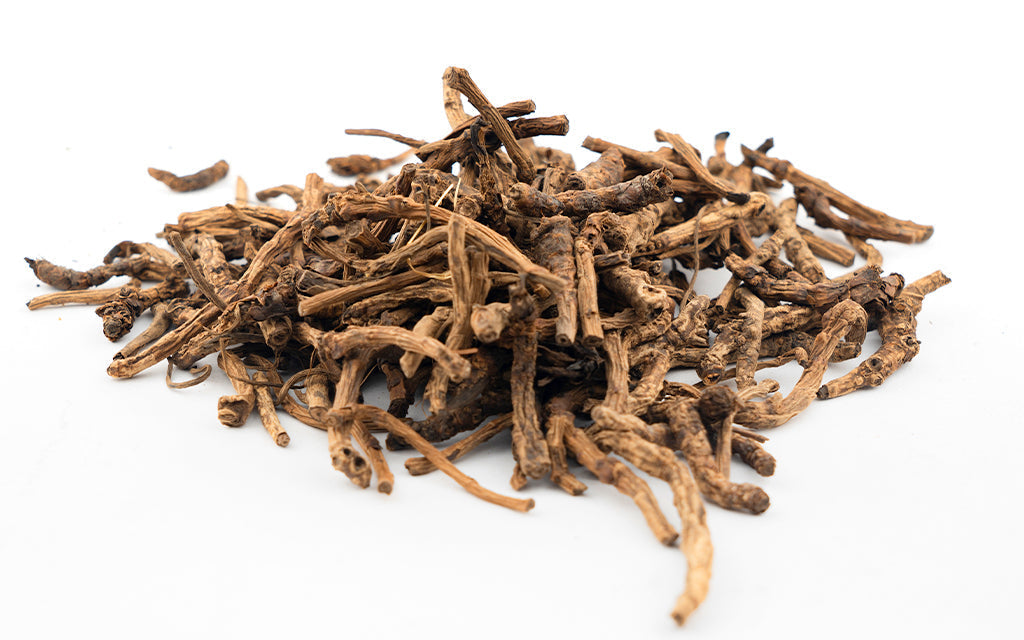
Scientifically addressed as Picrohiza Kurroa, it is among the leading natural immunity boosters and detoxifiers in the realm of Ayurveda. It is a potent herb found in the mesmerising Himalaya, furnished with medicinal properties all around.
-
For a long time, it has been an inseparable part of Ayurvedic medicine and Unani medicine. It is believed to be good for overall well-being.
-
It is an antioxidant that cleanses the liver, boosts overall immunity, helps with overall well-being, and helps with skin issues as well.
-
Mostly, people use the powdered form of Kutki.
-
It is highly rich in bioactive compounds, especially kutkin, which helps in deep and immense liver detoxification.
-
Further, it is rich in anti-inflammatory and antioxidant effects.
Kutki- A blessing in Disguise
Have you ever been to the Himalayas at 5 am, when it is covered in snow, and the valleys look immensely beautiful and foggy? Did you know it is a natural barrier against strong winds that blow from the extreme south and hence become a abode to 3,500+ herb species which are available in the valley and mountains? Just go as high as 5,500 metres above sea level, and you will explore more magical herbs than ever, like kutki.
It is a perennial herb which is bitter in taste. It is also extremely rich in iridoid glycosides, such as picroside I and II. Do you know this feature makes it more prone to hepatoprotective effects?
In Ayurveda, you will find kutki under the subhead of liver treatment, digestion reliever, and cold and cough fighter.
Origin of Kutki
If you ever get a chance to read Charak Samhita, you would have come across the term kutki. It is older than 5,000 years and has contributed significantly to the Ayurvedic and Unani treatment. Its scientific name, Picrorhiza, is derived from the Greek words picro, indicating bitterness and rhiza, meaning root.
Different names of Kutki
Kutki has different names in different languages. In English, it is popular as Hellebore, Indian gentian, Picrorrhiza, and Yellow gentian.
Different names in different parts of India:
-
In Hindi, you will see people addressing it as karoi, karwi, kardi, karoi, and karu.
-
Similarly, in Sanskrit, it is called Katuki, Arishta, Matsyapitta, and Katurohini.
-
In the Kannada language, people call it Katuka Rohini.
-
In Telugu, it is known as Katuka rogani and Katukkurohini.
-
In Tamil, people call it Katukarogini and Kaduguohini.
-
People of Punjab label it as Karru, Kaund, and Kaud.
-
In Marathi, it is popular as Bala Kadu and Kali Katuki.
-
In Malayalam, it is called Kadugurohini.
-
People of Gujarat call it Kadu and Katu.
-
In Bengali, it is popular as Katuki and Katki.
It is among those rare herbs that have gained popularity and are known by different names internationally.
-
In Chinese, it is called Hu Huang Lian.
-
In Farsi and Arabic, people call it Kharabake.
Hidden Facts About Kutki
Every Himalayan herb has some unbelievable hidden fact that makes it more unique in every way.
-
This plant grows in the hostile environment of the high-altitude alpine area of the Himalayas. It grows at a height of a minimum of 2,700 metres and extends to 5,200 metres.
-
It has been overharvested for a long time, and now people are looking for more sustainable ways to grow and preserve it. It is close to extinction if not protected properly.
Where is Kutki grown?
It is grown in the places near the Himalayas at higher altitudes. It is seen in India, Pakistan, Western China, Nepal, and Bhutan.
How to use Kutki?
It is used in three forms, powder, kadha and tincture.
The powdered form of kutki is mixed with warm water, along with honey, then taken as a kadha. If used on the skin, a paste of kutki in warm water is made and applied directly. It is also consumed as a tincture to treat various health ailments in Ayurveda.
Kutki has a list of benefits for the users. You should just be aware of how to use it.
Might Help With Better Digestion
In Ayurveda, kutki is regarded as a natural digestive stimulant. It is believed to enhance the growth of bile and enzymes. In the long run, it might help control bloating, constipation, and indigestion to some extent. It has anti-inflammatory properties that, over time, might relieve gastrointestinal symptoms, benefiting conditions such as irritable bowel syndrome and gastritis. It might slowly help improve the overall digestive situation.
Anti-inflammatory Effects
Kutki has bioactive components that are already known to the world to exhibit anti-inflammatory properties. These compounds are believed to control inflammation throughout. With the presence of inflammatory enzymes, kutki brings overall improved well-being.
Protection with Antioxidant
Kutki is rich in antioxidants that help in pushing harmful free radicals away that slowly damage cells and rapidly increase the process of ageing. This property protects all important and delicate organs and manages the overall health. If taken in the long run, it might help in promoting longevity and practising health management.
Might Boost Immune System
Kutki enhances the overall immune system to check the smooth functioning of immunity. It is full of antimicrobial properties that might help it stand strong against infection. If you are looking for simple ways to boost immune resilience, this is for you.
Better Skin
Everyone, irrespective of gender, dreams of crystal clear skin, and thanks to its anti-inflammatory and detoxification properties, one might get healthy skin by consuming it in the right way. Premature skin ageing is also dealt with, resulting in a clear and radiant complexion.
Might Help With Cold and Cough
Its anti-inflammatory properties might improve your health by calming the respiratory passages and relieving cold and cough symptoms.
Points to Practice Before Consuming Himalayan Herb- Kutki
-
Do not start anything new before consulting your doctor. Sometimes you may be allergic to something that you are unaware of, and instead of helping, it can react with the body.
-
If you are on medication, it cannot be consumed without a doctor's advice.
-
Pregnant ladies, breastfeeding mothers, infants, and sick people should not consume them.
-
Research is ongoing on most of them, and it is advisable not to experiment with anything unless you are sure about it.
Himalaya- Home to Kutki and Serenity
Climbing the serenity of mountain ranges is peaceful, mesmerising, and can be equally beneficial if you know Ayurveda. Some wise man once said, "Oceans have expensive, materialistic treasures, but all the health wonders lie in the mountains," and it seems he was pointing towards kutki.
A basket full of these herbs is equivalent to a strong life insurance plan that ensures you remain healthy only if you know how to use them. Kutki might slowly pave the way to such a lofty height in your home, offering many benefits and unbelievable results. Ayurveda and Yurani medicine had always surrounded it.
Just visit your doctor before you start them. Himalayan kutki is waiting!
Frequently Asked Questions
How many herbs grow in the Himalayas?
So far, the world is aware of three species of Kutki growing in the heart of the Himalayas, namely Picrorhiza Kurroa, Picrorhiza Scrophulariiflora, and Picrorhiza Tungnathii. It is expected that there are more species to explore.
How to identify Himalayan kutki?
You need to be careful when deciding where to locate kutki. You need to be thorough about their shapes, colours, textures, and appearance. You can check with multiple sources about their accuracy. Examining different parts of the plant may help. You need to recheck the dried roots that are available, and checking for the particular physical traits makes it easier to decide.
What is regarded as the Himalayan kutki plant?
One species of kutki that grows in the Himalayas, named Picrorhiza Kurroa, generates huge profits. It is often found in the Nepalese Himalayas. It is an old, perennial herb, and some treat it as Indian gentian as well.
Herbs that are grown in the Himalayas are hard to find and cannot be grown in every region. Some other species of the same family may grow in different regions, but what grows in the Himalayas is unique in its features, appearance, and benefits.
Is it advisable to buy kutki?
Buying kutki is an excellent idea, but you need to double check the sources and has to have a keen eye for the products. Check for the genuine sellers and grab the right product; you are good to go. Nutrition, wellness, immunity, and overall well-being await you!
frequently asked questions
-
Can one take Kutki daily?
-
Can Kutki help with healthy weight management?
-
Can one take Kutki with other healthy Ayurvedic herbs?
-
What does Kutki stand for in Ayurveda?