




A sneeze, a scratchy throat, and someone hands you honey and ginger. Here's what actually happens next, according to the research, not just the tradition.
You've heard the rules a hundred times: never heat it, never mix it with ghee, never give it to babies. Some of these are backed by real science. Others are traditions with no evidence either way. This guide sorts out which is which, adds the nutritional facts most honey articles skip, and tells you what actually pairs well with a spoonful, so the next time you reach for the jar, you know exactly what you're relying on.
Key Takeaways
- A 2018 Cochrane systematic review found honey reduced cough frequency in children better than no treatment or placebo, performing similarly to a common antihistamine.
- Heating honey measurably degrades its natural enzymes and increases a compound called HMF, a real, lab-measured effect documented in controlled heating studies, though normal warm (not boiling) use isn't established as harmful.
- Honey should never be given to infants under 12 months, in any form. This is a firm CDC recommendation, affirmed by the FDA and American Academy of Pediatrics, not a traditional caution.
- One tablespoon of honey has about 64 calories and 17 grams of sugar, according to USDA nutrient data. It's a sweetener, not a health food, even though it behaves a little differently in the body than table sugar.
- Popular cautions about combining honey with ghee, radish, or non-vegetarian food are traditional (mainly Ayurvedic) and currently have no peer-reviewed research confirming or denying them.
Does Honey Actually Help With Cough?
This is the question most people actually want answered, so it's worth answering directly: yes, there's real clinical evidence behind honey and cough, more than for most home remedies.
A 2018 Cochrane systematic review pooled randomized controlled trials involving children aged 1 to 18 with acute cough from upper respiratory infections. It found honey reduced both the frequency and severity of cough compared with no treatment or placebo, and improved sleep quality for children and their parents. Honey performed about as well as diphenhydramine, a common antihistamine, though it didn't outperform dextromethorphan, a standard cough suppressant. A separate 2021 meta-analysis in BMJ Evidence-Based Medicine reached similar conclusions across a broader set of studies.
A few things worth knowing before reaching for a spoonful:
- This evidence applies to children over 1 year old and adults, never infants under 12 months.
- The studied dose is small, around half a teaspoon to a teaspoon before bedtime, not large quantities through the day.
- Honey isn't shown to cure a cough or fight the underlying infection. The evidence is for symptom relief and comfort, similar to what a cough syrup offers.
- A persistent, severe, or worsening cough still needs medical attention.
What's Actually in a Spoonful of Honey
Before the myths and the pairings, it helps to know what you're eating. According to USDA FoodData Central, one tablespoon of honey (about 21g) contains:
|
Nutrient |
Per tablespoon (21g) |
|
Calories |
~64 |
|
Carbohydrates |
~17g |
|
Sugars |
~17g |
|
Fibre, fat, protein |
0g |
|
Vitamins & minerals |
Negligible |
Honey is essentially fructose and glucose already in free (separated) form, plus trace water and minerals, and, if raw and minimally processed, natural enzymes and antioxidants. It's not a source of meaningful vitamins or minerals; its value is in flavour, texture, and its gentler effect on blood sugar compared with table sugar (more on that below).
Simple, Everyday Ways to Use Honey
Most of the ways people already reach for honey are fine:
- Straight off the spoon, the simplest way to actually taste what a specific honey's flavour profile is like. This varies more than people expect depending on what the bees fed on. A single-forest, single-season honey often tastes noticeably different from a season-blended one.
- With nuts, roasted or raw, drizzled or dipped. The sweetness balances the richness of nuts well.
- With fruit, a light drizzle works especially well with berries, stone fruits like plums and peaches, and citrus. Honey tends to intensify a fruit's existing flavour rather than mask it.
- Stirred into breakfast, cereal, oats, or yogurt. Be mindful of the portion, since it's still concentrated sugar.
- In lukewarm water or tea, a common morning habit. Temperature is the one thing worth getting right here (see below).
What Pairs Well With Honey, and How to Match It
Honey isn't one flavour. A light, floral honey and a dark, robust forest honey behave differently on a plate, and matching the two makes a real difference:
- Lighter, milder honeys pair well with delicate foods where you don't want the honey to overpower: fresh fruit, mild yogurt, a light green tea, or a soft cheese. Our Litchi Honey is a good example, light, floral, and easy to stir into tea or drizzle over fruit without dominating it.
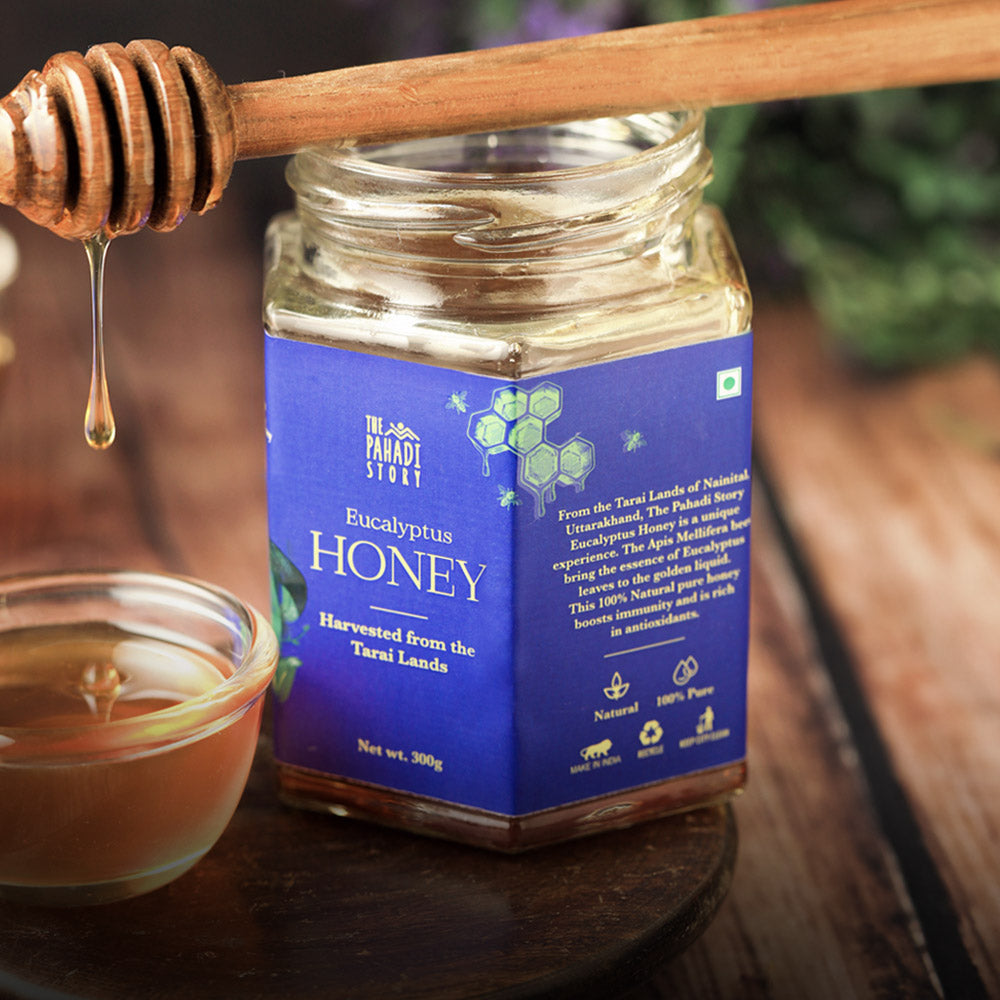
- Deeper, more robust honeys hold their own against roasted nuts, a strong black tea, toast, or oatmeal, where a lighter honey would get lost. Our Eucalyptus Honey and Jamun Honey fall here, both distinct enough to stand up to warm water, milk, or a bolder pairing.
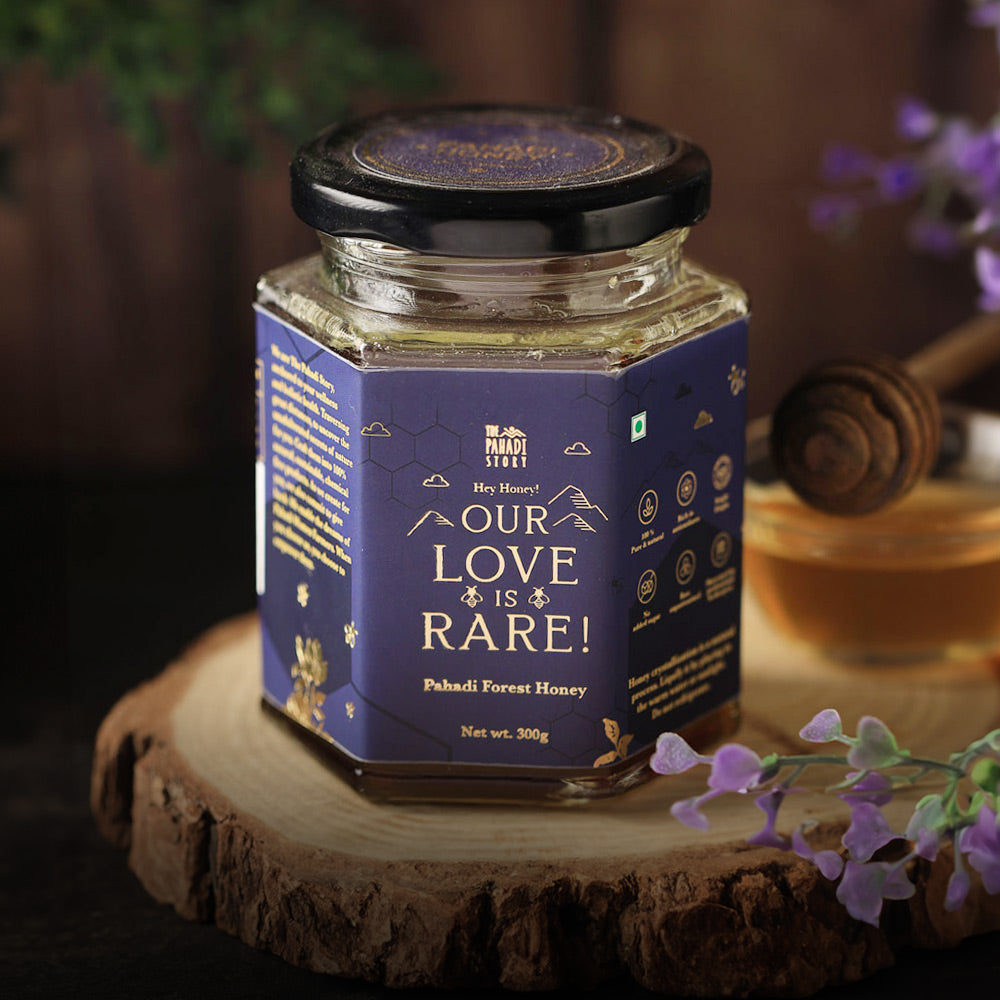
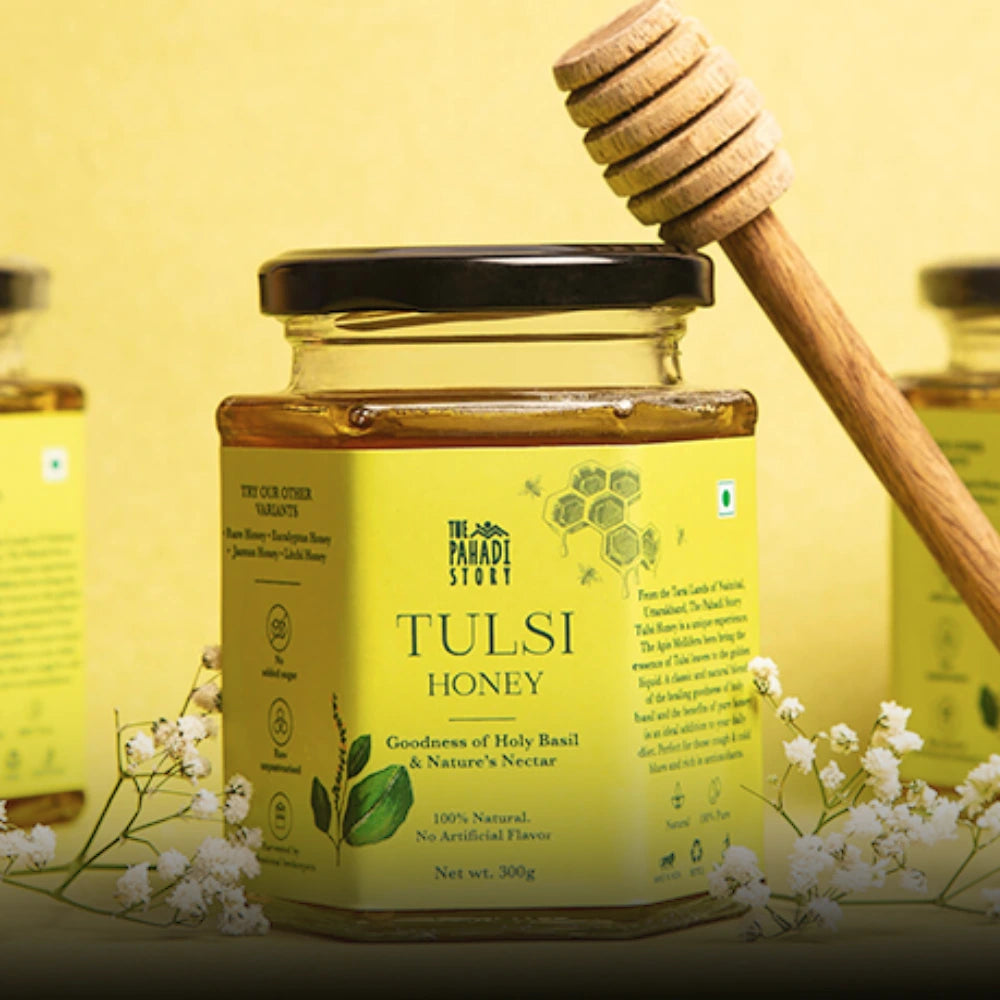
- If you'd rather taste a range before settling on a favourite, our Honey Combo bundles Forest, Tulsi and Litchi honey together, so you can compare a bold and earthy profile against a floral, fruity one side by side.
- For anyone curious about proof rather than promises, our Himalayan Honeydew Honey is single-forest, single-season, and independently lab-tested, worth a look if traceability matters as much as taste to you.
A few reliable combinations worth trying regardless of which honey you're using: tea, coffee, roasted nuts, sliced fruit, plain yogurt, warm (not hot) oatmeal, and toast.
Heating Honey: What the Science Actually Shows
This is one of the most repeated honey "rules," and it's rooted in real food science, even though the popular explanation ("heating honey turns it toxic") overstates it.
Raw honey contains natural enzymes, mainly diastase and invertase, that are sensitive to heat. A 2023 study published in the Diyala Agricultural Sciences Journal heated honey samples at controlled temperatures (40°C, 60°C, 80°C and 100°C) and found these enzymes degrade steadily as heat and exposure time increase. At the same time, a compound called hydroxymethylfurfural (HMF) forms; food scientists use HMF levels specifically to detect how much a batch of honey has been heated or how long it's been stored. The same study found that heating up to 40°C was safe for long-term storage, while higher temperatures required much shorter exposure times to keep honey within quality limits.
Practically:
- A small amount of honey stirred into a warm (not boiling) drink isn't established in the research as causing meaningful harm.
- Boiling honey directly, or holding it at high heat for extended periods, does more measurable damage.
- If preserving honey's natural enzyme content matters to you, add it to food or drinks once they've cooled to lukewarm, or use it raw and unheated.
This is a case where the underlying caution is legitimate, it just deserves a more precise explanation than "heating honey is toxic."
Traditional Food-Pairing Cautions: What's Folklore vs. What's Tested
Ayurveda includes several long-standing cautions about pairing honey with certain foods, most commonly ghee, radish, and non-vegetarian dishes like fish. It's worth being upfront about where these stand: as of now, no peer-reviewed research confirms harm from any of these combinations. That doesn't make them meaningless. Traditional food-pairing systems often encode generations of observed experience, but they shouldn't be presented as settled science either.
- Honey and ghee, a widely repeated Ayurvedic caution (sometimes framed around viruddha ahara, incompatible food combinations). No scientific study confirms or refutes a negative effect. Avoiding it is a reasonable personal or cultural choice, not a documented health requirement.
- Honey and radish, also unconfirmed by research. Many people simply find the taste combination unpleasant, which may be part of where the caution originated.
- Honey and non-vegetarian dishes, some people report digestive discomfort combining honey with fish or meat, but there's no controlled research explaining why, or confirming this happens consistently across people.
If any of these combinations genuinely cause you discomfort, that's worth listening to, regardless of what research has or hasn't caught up to. But they're accurately described as traditional caution, not proven risk.
Why Honey Should Never Go to Infants Under 12 Months
This is the one rule in this article with strong, well-established evidence behind it, and it deserves more weight than a kitchen tip.
Honey can contain spores of Clostridium botulinum, a bacterium that's generally harmless to older children and adults but can germinate in an infant's immature gut and produce a toxin causing infant botulism, a rare but serious illness. Symptoms typically start with constipation and can progress to poor feeding, weakness, drooping eyelids, and in severe cases, breathing difficulty requiring hospital care. The CDC recommends against giving honey, raw, pasteurized, cooked, or baked into any food, to children under 12 months, a position affirmed by the FDA and American Academy of Pediatrics. This includes formula, water, or a pacifier.
This isn't a traditional caution passed down through households. It's an active public health recommendation, and it applies no matter how pure, raw, or high-quality the honey is. The spores occur naturally in the environment and can't be reliably screened out.
Honey vs. Sugar: What the Research Actually Shows
Honey is often assumed to be a straightforwardly "healthier" swap for sugar. There's some real evidence behind that, but the difference is smaller and more nuanced than marketing usually suggests.
|
Honey |
Table sugar |
|
|
Glycemic index |
~32 to 87, depending on floral source (University of Sydney GI Database) |
~65 |
|
Calories per tbsp |
~64 (USDA) |
Slightly lower |
|
Antioxidant compounds |
Small amounts (flavonoids, phenolics) |
None |
|
Still an added sugar? |
Yes |
Yes |
Honey's sugars, mainly fructose and glucose, are already in free (separated) form, while table sugar's sucrose has to be broken down in the body first, which is part of why lower-GI honey varieties tend to raise blood glucose more gradually. Note that GI varies widely by floral source, so "honey has a lower GI than sugar" isn't true for every jar; it's true for many, and worth checking per variety if it matters for your health.
For most people, this adds up to: honey is a reasonable substitute for refined sugar in moderation, with a modestly gentler effect on blood glucose in many varieties and a few trace nutrients sugar lacks, not a health food to use freely. Anyone managing diabetes or blood sugar should treat honey the way they'd treat any other sweetener: in small, consistent amounts, ideally after talking with a doctor or dietitian.
Common Honey Mistakes Worth Avoiding
- Treating honey as calorie- or sugar-free. It's a concentrated sweetener; a little goes further than it looks.
- Giving honey to a baby "just this once." Even a small amount carries the same infant botulism risk. There's no safe minimum quantity under 1 year.
- Boiling honey directly or stirring it into boiling water. This is where heat-related enzyme loss and HMF formation are most significant.
- Assuming all traditional food-pairing cautions are equally well-founded. Infant safety is backed by strong evidence; honey-and-ghee is unproven tradition. Treating them the same blurs an important distinction.
- Using honey as a stand-in for medical treatment. It's a reasonable comfort measure for a mild cough, not a treatment for a serious or persistent illness.
FAQs
Is it fine to eat honey every day?
For most healthy adults, yes, in moderate amounts. Roughly a tablespoon is a common reference point, though there's no single "correct" daily amount established by research. It's still an added sugar, so account for it the way you would any other sweetener.
Which honey should I use for tea versus a cheese board or roasted nuts?
As a rough guide, lighter honeys suit delicate pairings (fruit, mild tea, soft cheese) and richer, more robust honeys suit bolder ones (roasted nuts, black tea, toast). Taste your honey first; the flavour tells you where it belongs.
How many calories are in a tablespoon of honey?
About 64 calories and 17 grams of sugar, per USDA data, similar to, though not identical to, a tablespoon of table sugar.
What's a reasonable way to start adding honey to my routine?
A common approach is one to two teaspoons stirred into a glass of lukewarm (not hot) water or a warm drink once it's cooled slightly. This keeps the honey's natural enzymes largely intact.
Is honey safe during pregnancy?
Pasteurized and raw honey are both generally considered safe in moderate amounts during pregnancy, unlike the infant botulism risk, which is specific to an infant's undeveloped gut. If you have questions about honey or any specific food during pregnancy, check with your doctor.
Does raw honey have more benefits than regular honey?
Raw honey retains more of its natural enzymes because it isn't heat-processed the way pasteurized honey is, consistent with the heating research above. The practical difference for most people is modest, but if enzyme content and minimal processing matter to you, raw is the more intact option.
A Simpler Way to Think About Honey
Honey isn't a miracle food, and it isn't an empty myth either. The evidence genuinely supports it as a comfort measure for cough symptoms in children over 1 and adults, as a somewhat gentler-on-blood-sugar alternative to refined sugar for many varieties, and as a source of trace antioxidants. It just isn't a cure, an immunity switch, or a substance that needs heavy ritual around how it's eaten, with one clear exception: it should never go to a child under 12 months, in any form, for any reason.
At The Pahadi Story, our forest and single-source honeys are harvested and bottled with that same principle in mind: proof before promise. Explore the range and pick the one that matches how you actually plan to use it: an everyday spoon, a cup of tea, or a bolder pairing on its own.
Enjoy it the way people have for centuries: off the spoon, over fruit, stirred into a warm drink once it's cooled, and let the evidence, not just the tradition, guide the rest.
Sources & References
- Oduwole O, Udoh EE, Oyo-Ita A, Meremikwu MM. Honey for acute cough in children. Cochrane Database of Systematic Reviews. 2018;(4):CD007094.
- Abuelgasim H, Albury C, Lee J. Effectiveness of honey for symptomatic relief in upper respiratory tract infections: a systematic review and meta-analysis. BMJ Evidence-Based Medicine. 2021;26:57-64.
- Mohammad NZ, Abdoulrahman K, Karim AY. Diastase Enzyme Activity and Hydroxymethylfurfural Production During Thermal Processing of Honey. Diyala Agricultural Sciences Journal. 2023;15(2):1-10.
- Centers for Disease Control and Prevention. Foods and Drinks to Avoid or Limit: Infant and Toddler Nutrition. Guidance affirmed by the FDA and American Academy of Pediatrics.
- USDA FoodData Central. Honey, nutrient profile per tablespoon.
- University of Sydney. The International Glycemic Index (GI) Database.
This article is intended for general nutrition education and does not replace personalised advice from a qualified doctor or dietitian.