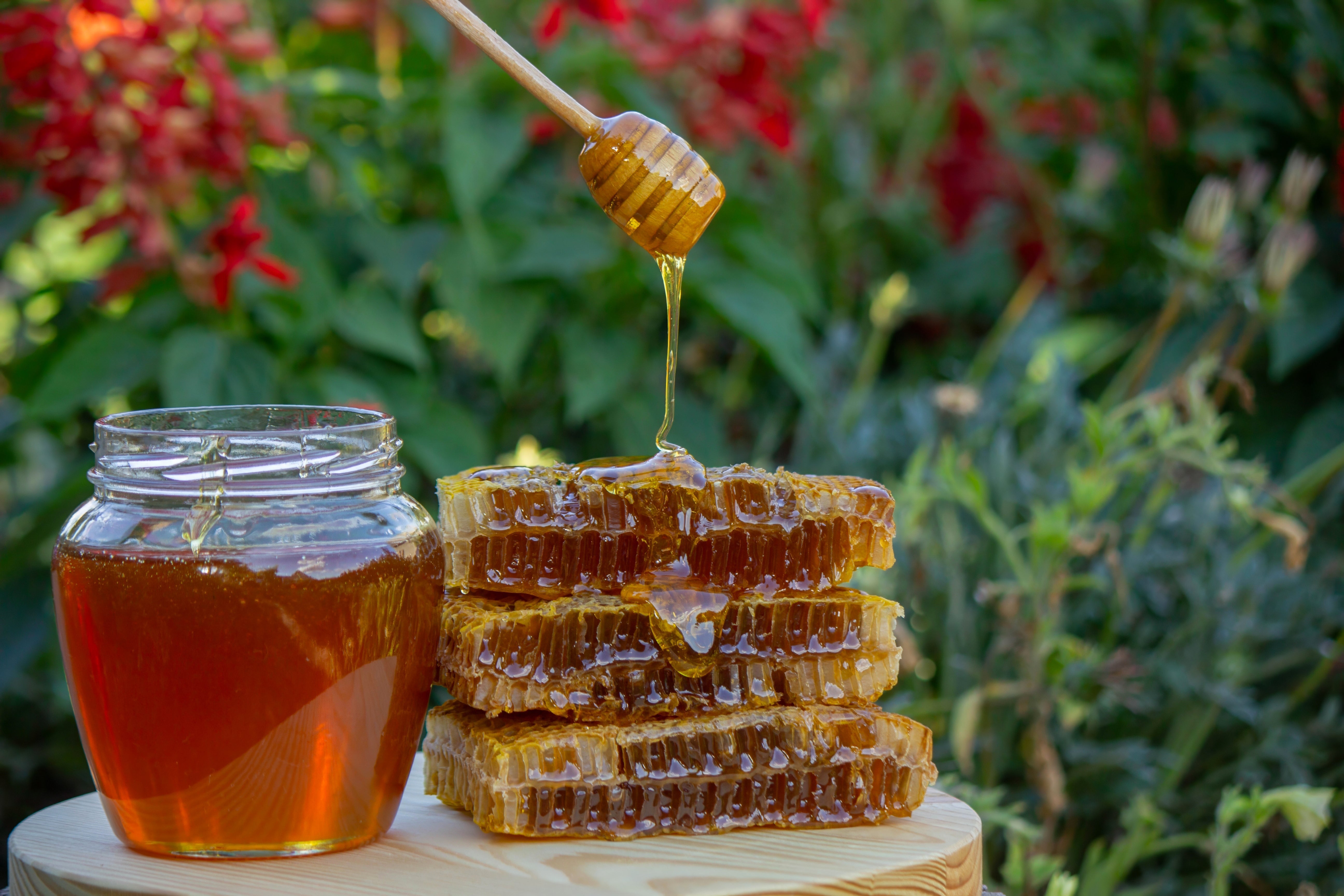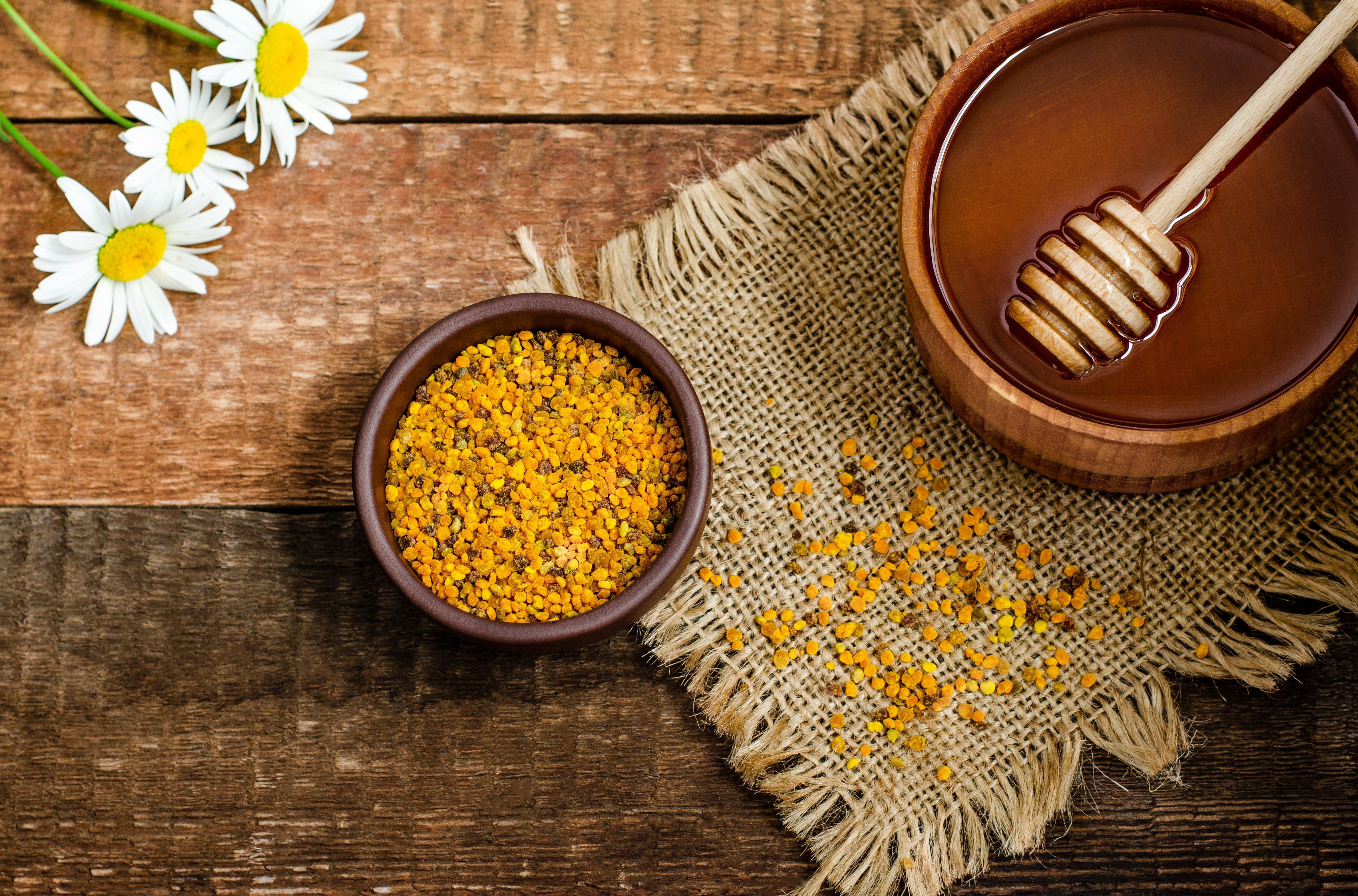



Most honey starts with a flower.
A bee finds a blossom, collects the nectar, carries it back to the hive, and slowly turns it into something golden and sweet. That is the honey most of us grew up with. The one in the kitchen cupboard. The one stirred into tea or drizzled over toast without a second thought.
But there is another kind of honey. One that does not begin in a meadow at all. It starts in the quiet canopy of a forest, on the surface of leaves, along the bark of old trees, and in a remarkable exchange between tree sap, small insects, and bees that know exactly where to look.
This is honeydew honey. And the difference between honeydew honey and blossom honey is not just about colour or taste. It goes all the way back to the source.
Understanding that difference also answers a question many buyers have: why is honeydew honey so rare, and why does that rarity need to be proven rather than just claimed?
This article covers both questions in full.
Key Takeaways
-
Blossom honey comes from flower nectar. Honeydew honey comes from sugary secretions found on trees, typically left behind by sap-feeding insects like aphids.
-
Honeydew honey is usually darker, less sharply sweet, more mineral-rich, and slower to crystallise than most blossom honeys.
-
The label "forest honey" does not automatically mean honeydew honey. A honey can come from a forest and still be made mostly from floral nectar.
-
Honeydew honey is rare because it depends on a specific ecological chain. Trees, insects, weather, season, and bees all need to align at the same time.
-
Colour and taste are clues, not proof. Electrical conductivity, pollen analysis, and lab testing are what separate a genuine honeydew honey claim from just a label.
-
Neither type is automatically better. They are different honeys with different characters, uses, and profiles.
What Is the Difference Between Honeydew Honey and Blossom Honey?
The core difference comes down to the source.
Blossom honey is made when bees collect nectar directly from flowers. The nectar is produced by flowering plants to attract pollinators. Bees carry it back to the hive, add enzymes, reduce the moisture content, and store it in honeycomb cells. The result is the familiar honey most people know. Floral, bright, and golden.
Honeydew honey begins somewhere else entirely. Instead of nectar, bees collect sugary secretions found on tree surfaces, including bark, leaves, branches, and needles. These secretions are typically left behind by small sap-feeding insects like aphids and scale insects. Once back at the hive, bees process honeydew in almost exactly the same way they process nectar. Enzymes are added, moisture is reduced, and the honey is sealed in wax cells.
The work inside the hive is the same. What changes is what the bees collected before they came home.
How Bees Make Each Type of Honey
Blossom Honey
-
Bees visit flowers and collect floral nectar
-
They carry it back to the hive
-
Bees pass the nectar between themselves, adding enzymes along the way
-
Moisture is reduced through fanning
-
The honey is stored in wax cells and sealed with beeswax
Honeydew Honey
-
Sap-feeding insects (aphids, scale insects) feed on tree sap
-
They release excess sugars onto bark, leaves, and branches as honeydew
-
Bees locate and collect these secretions
-
They carry honeydew back to the hive
-
Bees add enzymes and reduce moisture, just as they would with nectar
-
The honey is stored and sealed in wax cells
The difference begins before the hive. For blossom honey, the bee goes to the flower. For honeydew honey, the bee goes to the forest.
Honeydew Honey vs Blossom Honey: Full Comparison
|
Parameter |
Honeydew Honey |
Blossom Honey |
|
Source |
Tree-based sugary secretions via sap-feeding insects |
Floral nectar |
|
Where bees collect |
Bark, leaves, branches, forest surfaces |
Flower blossoms |
|
Ecosystem |
Forests and wooded areas, often at elevation |
Fields, orchards, gardens, meadows |
|
Colour |
Deep amber to near-black |
Pale gold to amber |
|
Taste |
Malty, earthy, resinous, layered |
Floral, fruity, bright, sweet |
|
Sweetness |
Less sharply sweet |
Brighter and more immediately sweet |
|
Mineral content |
Higher (electrical conductivity at or above 0.8 mS/cm) |
Lower |
|
Sugar profile |
Higher oligosaccharides, including melezitose |
Dominated by fructose and glucose |
|
Antioxidant activity |
Consistently higher |
Moderate |
|
Crystallisation |
Slower, often resistant |
Faster, depending on glucose content |
|
Common examples |
Pine, fir, oak, beech, forest honeys |
Acacia, clover, mustard, wildflower, litchi |
|
Best use |
By the spoon, with curd, cheese, bread, glazes |
Tea, baking, breakfast bowls, everyday sweetening |
What Does Honeydew Honey Taste Like?
This is where most people are surprised the first time they try it.
Honeydew honey does not taste like supermarket honey. It is less sweet, more layered, and has a depth that floral honeys simply cannot replicate. The flavour is most often described as malty, resinous, and mineral, with a clean finish that builds slowly rather than hitting all at once.
The specific taste varies depending on the dominant tree source. Fir honey from mountain forests is delicate and gently resinous. Oak honey is darker and leans slightly savoury. Pine honey is aromatic and robust. What stays consistent across all well-produced honeydew honeys is the absence of cloying sweetness. The complex sugar profile, which is higher in oligosaccharides and lower in simple fructose, means the flavour develops on the palate rather than peaking quickly and fading.
Blossom honey, by contrast, delivers what most people expect: floral, fruity, bright, immediately sweet, and familiar. A light acacia honey is clean and mild. A mustard honey is sharper. A wildflower honey shifts with the season and the landscape it came from.
Neither is better. They are simply different.
Why Is Honeydew Honey So Rare?
This is the question that sits underneath the comparison. And the answer matters for anyone buying honey in India.
Honeydew honey is rare not because of artificial scarcity. It is rare because of ecological complexity. For it to exist in meaningful quantities, a specific chain of events needs to happen in a forest ecosystem:
-
The right trees must be present. Pine, fir, oak, beech, chestnut, and related species that support sap-feeding insect populations are needed.
-
Sap-feeding insects must be active. Aphids and scale insects must be feeding on tree sap and releasing honeydew onto bark and leaves.
-
Weather must cooperate. Heavy rainfall washes honeydew away before bees can collect it. Excessive heat or wind reduces availability.
-
Bees must choose honeydew over nectar. When flowering plants are abundant, bees often go for floral nectar first. Honeydew becomes the priority when blossoms are limited.
-
The season window must be long enough. This window can be narrow and unpredictable, varying significantly from one year to the next.
-
Volume must be sufficient for harvest. All of the above conditions need to align long enough to produce collectible quantities.
If any link in this chain breaks, honeydew honey production drops sharply or does not happen at all. A forest that yields a strong honeydew flow in one season may produce almost nothing the next.
This is why honeydew honey should not simply be called rare because it is dark or carries a premium price. Genuine rarity has a specific ecological basis, and that basis should be demonstrable rather than just stated on a label.
The Forest Label Problem: What "Forest Honey" Actually Means
This is one of the most important things for Indian consumers to understand: forest honey is not automatically honeydew honey.
A honey may come from a forested region. But if the bees in that forest collected mainly from wildflowers, tree blossoms, or other flowering plants within or around the forest, the honey is a blossom honey that happens to come from a forest landscape. That is not the same thing as honeydew honey.
Honeydew honey specifically refers to honey made from tree-based sugary secretions linked to sap-feeding insect activity. That is a specific category defined by source, not setting.
So when you see "forest honey" on an Indian label, these are the right questions to ask:
-
Did the bees collect honeydew secretions or floral nectar?
-
Is the tree source named and explained?
-
Has electrical conductivity been tested and documented?
-
Are third-party lab reports available?
-
Is the geographic origin clearly stated with traceability?
A dark colour and the word "forest" on a label are consistent with honeydew honey. They are not proof of it.
What Lab Tests Actually Reveal
Colour and taste provide clues. Testing provides confirmation.
Honeydew honey is formally distinguished from blossom honey through measurable lab tests, not appearance alone.
Electrical Conductivity
Minerals conduct electricity. Because honeydew honey typically carries a higher mineral and ash content than blossom honey, it shows higher electrical conductivity. A reading at or above 0.8 mS/cm is the EU Honey Directive threshold that distinguishes honeydew from blossom honey. Brands making serious honeydew claims should be able to share this result.
Sugar Profile
Blossom honey is dominated by simple sugars such as fructose and glucose. Honeydew honey contains a higher proportion of complex sugars, including oligosaccharides like melezitose. This influences the sweetness (lower), texture, and how slowly it crystallises.
Pollen and Microscopic Analysis
Pollen analysis identifies the botanical and geographic origin of a honey. Microscopic analysis can reveal forest-origin biological markers, including specific spores, yeast cells, and fungal fragments not typically found in blossom honeys. Together, these provide the closest thing to a botanical fingerprint.
NMR Profiling
Nuclear Magnetic Resonance testing produces a molecular profile of the honey, which is then compared against a global database of verified samples. This is one of the most robust ways to check authenticity and detect the addition of foreign sugars.
Diastase Activity and HMF
High diastase activity confirms the honey has not been overheated. Low HMF (hydroxymethylfurfural) indicates minimal heat exposure and good handling. These markers speak to freshness and quality rather than category, but they matter for any honey claiming to be raw or minimally processed.
Does Honeydew Honey Exist in India?
Yes. But the category has barely been recognised here.
India has vast forest ecosystems across the Himalayas, Uttarakhand, Himachal Pradesh, and the Northeast. These regions have the altitude, the biodiversity, the tree species (pine, oak, rhododendron, fir), and the native bee populations, particularly Apis cerana, the Himalayan honeybee, that are known to produce honeydew honey in comparable ecosystems around the world.
What has been missing in India is not the forest. It is the classification, the lab testing, and the transparent, proof-led conversation that would allow Indian consumers to understand what they are actually buying.
Much of what is sold as "forest honey" or "multiflora honey" in India may include some honeydew influence. But without electrical conductivity testing, pollen analysis, and proper origin documentation, it remains an unverified claim rather than a confirmed category.
The opportunity is real. The forests are there. The question is whether producers are willing to test honestly and show the results.
How to Identify Genuine Honeydew Honey
When evaluating any honey labelled as honeydew or forest honey, look beyond the label itself:
Colour: Deep amber to near-black. If it is light golden, it is likely a blossom honey or a blend.
Electrical conductivity result: Should be above 0.8 mS/cm. Ask the producer if this has been tested and documented.
Named origin: Genuine honeydew honey comes from a specific, named forest or location. Vague geographic claims are a weak signal.
Published lab reports: The best honeydew honeys in the world come with accessible third-party test results. If a producer cannot show them, the category claim cannot be substantiated.
Pollen analysis: A pollen profile with identified species is the closest thing to proof of botanical and geographic origin.
Which Should You Choose?
There is no single right answer. It depends on what you want from honey.
Choose blossom honey if you want a lighter taste, brighter sweetness, floral aroma, and something that works easily in tea, baking, and everyday cooking. Blossom honey is the more versatile choice for most daily uses.
Choose honeydew honey if you want a deeper, more complex flavour, something less sweet and more mineral-led, suited to slow tasting or paired with curd, cheese, or warm bread. It also works well in glazes where that layered character can really come through. Honeydew honey rewards attention. It is not a background ingredient.
Both types can be excellent when honestly sourced, properly handled, and transparently tested. The difference is in what you are looking for, and whether the producer can actually prove what they are selling you.
Conclusion
The difference between honeydew honey and blossom honey starts with the source and runs through every quality marker: colour, taste, sugar profile, mineral content, crystallisation behaviour, and lab results.
Blossom honey carries the character of flowers. Familiar, bright, and seasonal. Honeydew honey carries the character of forests. Darker, more complex, and shaped by an ecological chain that cannot be manufactured or guaranteed.
That is also why honeydew honey is genuinely rare. Not because someone decided it should carry a premium price, but because it depends on trees, insects, weather, season, and bees all coming together in a specific way that no one can control. When those conditions do align, the result is a honey that most Indian consumers have never tasted, from ecosystems that have been producing it quietly for centuries.
The Himalayan forests have the right trees, the right altitude, and the right bees. The question for any honest producer is whether they have the right testing to prove it.
Frequently Asked Questions
1. What is the main difference between honeydew honey and blossom honey?
The source. Blossom honey is made from floral nectar collected directly from flowers. Honeydew honey is made from sugary secretions found on trees, typically left behind by sap-feeding insects such as aphids, which bees collect from bark, branches, and leaves.
2. Why is honeydew honey darker than blossom honey?
Honeydew honey gets its dark colour from tree-derived compounds and a higher mineral content in its composition. Darker honeys are also typically linked to higher phenolic content. However, colour alone does not confirm honeydew origin. Lab testing is still needed.
3. Does honeydew honey taste less sweet?
Most people find it noticeably less sharp in sweetness compared to blossom honey. It has a deeper, more layered profile, often described as malty, earthy, resinous, and sometimes slightly savoury. The complex sugar profile, with higher oligosaccharides and lower simple fructose, is what drives this difference.
4. Is forest honey the same as honeydew honey?
Not necessarily. Forest honey describes where the honey came from geographically. Honeydew honey describes what the bees actually collected. A honey from a forest that was made primarily from floral nectar is a forest-origin blossom honey, not honeydew honey. Testing is needed to confirm the category.
5. Why is honeydew honey rare?
Because it depends on a specific ecological chain: the right tree species, active sap-feeding insects, suitable weather, a narrow seasonal window, and bees that choose honeydew over nectar. If any part of this chain is disrupted, production drops significantly. The same forest can yield very different results from one season to the next.
6. How do I know if honeydew honey is genuine?
Look for a clearly named forest origin, electrical conductivity above 0.8 mS/cm, pollen analysis, and published third-party lab reports. Dark colour and a "forest" label are consistent with honeydew honey but are not proof on their own.
7. Does honeydew honey exist in India?
India has the forest ecosystems, tree species, altitude, and native bee populations that are associated with honeydew honey production. However, the category has rarely been properly classified or lab-tested in the Indian market. Most "forest honey" sold in India is not accompanied by the testing needed to confirm genuine honeydew origin.
8. Is honeydew honey better than blossom honey?
Neither is inherently better. They are different honey types with different flavour profiles and uses. Blossom honey is lighter and more versatile for everyday use. Honeydew honey is more complex and suited to slow, intentional eating. The better choice depends entirely on personal taste and purpose.
Sources
-
Codex Alimentarius. Codex Standard for Honey.
-
ScienceDirect. Differences Between Honeydew and Blossom Honeys: A Review. https://www.sciencedirect.com/science/article/abs/pii/S0924224416302631
-
Olga et al. Differentiation of Blossom Honey and Honeydew Honey. https://www.mdpi.com/2077-0472/2/1/25
-
Recklies et al. Differentiation of Honeydew Honeys from Blossom Honeys by HPTLC Coupled to Multivariate Data Analysis. https://pmc.ncbi.nlm.nih.gov/articles/PMC8838849/
-
Fernandez-Estelle et al. Characterization and Classification of Spanish Honeydew and Blossom Honeys. https://pmc.ncbi.nlm.nih.gov/articles/PMC9952669/
-
Becerril-Sanchez et al. Phenolic Compounds in Honey and Their Relationship with Antioxidant Activity.
-
Bruker. Honey Profiling by NMR.
-
Tsavea et al. Physicochemical Characterization and Biological Properties of Pine Honey Produced Across Greece.