


As the first dark clouds gather over the horizon and the scent of rain hits the parched earth, the Indian monsoon brings welcome relief from the summer heat. However, with the cooling rains comes seasonal dampness, which often leads to itchy throats and the occasional sniffle.
In many Indian households, this is the time when families reach for the glass jar in the pantry, stirring a golden spoonful into warm ginger water. But if you have ever noticed that your honey looks cloudy or thick compared to the clear syrups in the market, you might wonder: what is raw honey? and why is it considered the gold standard for wellness during the rainy season?
To choose the right honey for your family, it is important to understand that the most beneficial version of honey is the one that has not been stripped of its natural properties by high heat. Raw honey is essentially a “living” food that contains original pollen, propolis, and enzymes that many people value for supporting the body’s natural defenses.
While regular commercial honey is often treated to look clear and stay liquid, raw varieties may naturally thicken or crystallize, which is actually a sign of high quality and purity. Traditionally, this natural sweetener is used in various home remedies to provide comfort during the wet months, though it must always be kept away from infants under one year old.
By learning to identify truly unprocessed honey, you can ensure that your monsoon wellness routine is backed by the full nutritional power of the hive.
What This Blog Covers
-
What is Raw Honey?
-
Raw Honey Meaning in Hindi
-
What Makes Honey “Raw”?
-
What Does Raw Honey Contain?
-
Raw Honey vs Regular Honey
-
Raw vs Pasteurised vs Processed
-
What is Raw Honey Good For?
-
Is Raw Honey Safe to Eat?
-
How to Identify Pure Raw Honey in India
-
What Does Raw Honey Look Like?
-
Common Signs of Unprocessed Honey
-
Where to Buy Raw Unfiltered Honey in India
-
FAQs
What is Raw Honey?
If you are curious about what raw honey is, the best way to describe it is honey as it exists in the beehive.
Unlike the mass-produced versions found on most supermarket shelves, raw honey is concentrated flower nectar extracted from the honeycomb without alterations that change its chemical or physical nature. It is essentially nature’s original superfood, delivered from the bees to your table with almost no human interference.
When beekeepers harvest natural bee honey, they extract it from the frames and pour it through a simple mesh or nylon cloth. This basic straining process is only intended to remove large debris like beeswax particles or the occasional stray bee. Once strained, the honey is bottled immediately, bypassing commercial methods that often compromise quality.
It remains “raw” because it has not been heated, sterilized, or heavily processed through high-temperature industrial methods.
In India, this type of honey is highly valued because it retains its complex biological profile. Each batch of unprocessed honey has a distinct personality, with its taste, aroma, and colour determined by the specific flowers the bees visited and the seasonal conditions of the region.
Raw Honey Meaning in Hindi
The raw honey meaning in Hindi is most commonly understood as Kacha Shahad — कच्चा शहद.
The word “Kacha” signifies something that is raw, natural, or uncooked. You may also hear raw honey being referred to as:
-
Prakritik Shahad - प्राकृतिक शहद, (meaning natural honey)
-
Shuddh Shahad - शुद्ध शहद, (meaning pure honey)
To specifically ensure you are getting honey that has not been heated, asking for Kacha Shahad is usually the clearest way to communicate with traditional beekeepers or local sellers.
What Makes Honey “Raw”?
The answer to what makes honey raw lies in the absence of heat and heavy filtration.
To maintain its raw status, honey must not undergo pasteurization, which involves heating the liquid to high temperatures to destroy yeast and extend shelf life. While pasteurization makes honey look smoother and prevents it from solidifying, it can also reduce many of its natural compounds.
Raw honey also avoids ultrafiltration. While basic straining removes larger particles, ultrafiltration uses high pressure to remove even microscopic pollen grains, often to make honey more transparent.
Real raw honey is usually cold extracted honey, meaning it is removed from the comb at room temperature. This helps preserve the delicate enzymes, pollen, vitamins, and floral character that nature intended.
What Does Raw Honey Contain?
When you open a jar of unprocessed honey, you are looking at a complex natural mixture that may contain amino acids, minerals, vitamins, antioxidants, and plant-based compounds.
One of the most valuable aspects of raw honey is the presence of bioactive plant compounds known as polyphenols. These act as antioxidants, which many people associate with overall wellness and protection against oxidative stress.
Because raw honey has not been exposed to high heat, these sensitive plant compounds are better preserved in the bottle.
Pollen, Propolis and Natural Enzymes
The true powerhouse components of raw honey are pollen, propolis, and enzymes.
Honey with pollen is naturally rich and complex. Bee pollen contains several micronutrients, essential fatty acids, and antioxidants. This is one of the reasons raw honey often feels more substantial than regular syrup-like honey.
Honey with propolis is another major benefit of raw honey. Propolis, often called “bee glue,” is a resin-like substance bees use to protect their hive. It is commonly associated with antimicrobial and anti-inflammatory properties.
Raw honey also keeps its honey enzymes intact. One important enzyme, glucose oxidase, helps produce compounds that contribute to honey’s natural ability to inhibit bacterial growth. These delicate enzymes are usually among the first things lost when honey is heated in factories.
Raw Honey vs Regular Honey
The choice between raw honey vs regular honey is often a trade-off between nutrition and visual appeal.
Regular honey is processed to look attractive on store shelves. It is usually thin, clear, and remains liquid for a long time. However, to achieve this perfect look, it may be flash-heated and filtered until much of its natural character is reduced.
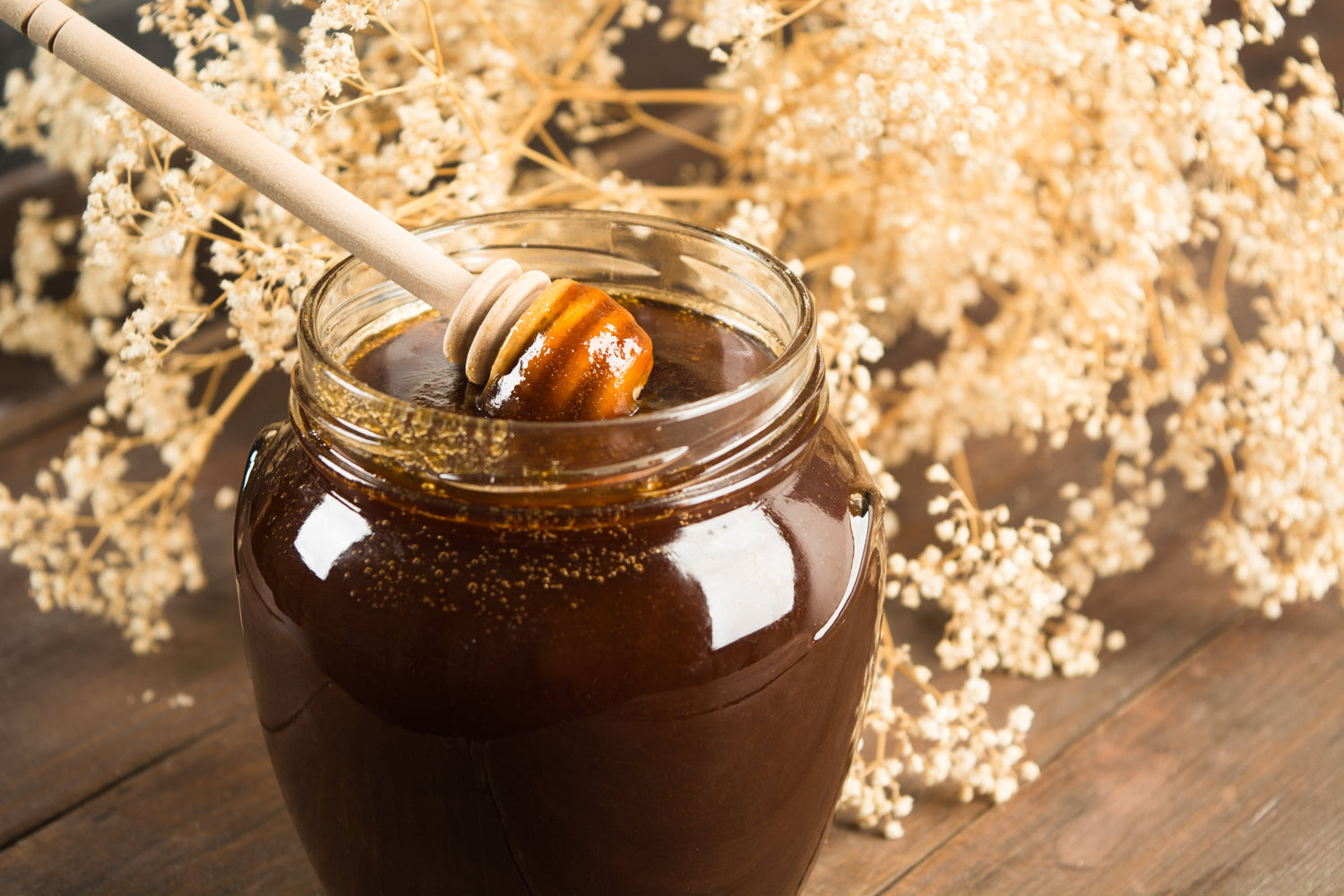
Raw honey, on the other hand, is closer to the honey found inside the hive. It may look cloudy, feel thick, crystallize over time, and carry a deeper floral aroma.
In simple terms:
Regular honey is processed for appearance. Raw honey is preserved for authenticity.
Raw vs Pasteurised vs Processed Honey
|
Attribute |
Raw Honey |
Pasteurised Honey |
Processed / Commercial Honey |
|
Processing |
Cold-extracted and lightly strained |
Heated to high temperatures |
Ultrafiltered and flash-heated |
|
Pollen |
Retained |
Usually reduced or removed |
Generally removed |
|
Enzymes |
Intact |
Mostly affected by heat |
Often destroyed |
|
Texture |
Thick, cloudy, may crystallise |
Smooth and thin |
Very clear and runny |
|
Taste |
Unique, seasonal floral notes |
Standard sweet flavour |
Uniform and very sweet |
|
Additives |
None, if truly pure |
May vary by brand |
May contain added syrups |
What is Raw Honey Good For?
During the rainy season, many people ask: what is raw honey good for?
While raw honey is not intended to treat or cure diseases, it has been used for centuries in Indian homes as a natural support for everyday wellness.
Many people use raw honey for:
Immune Support
Its phytonutrients and antioxidants may help support the body’s natural defenses during seasonal changes.
Cough and Throat Comfort
Raw honey is traditionally used as a soothing ingredient for sore throats and seasonal coughs.
Digestive Support
The natural enzymes in unfiltered honey may support gut health and digestion.
Natural Energy
Raw honey is often used as a quick source of energy because its natural sugars are easily converted by the body.
Skin and Wound Care
Traditionally, honey has also been used topically for minor burns or skin irritations due to its natural antimicrobial qualities.
Everyday Wellness
Many people also use raw honey with warm water, lemon, or ginger as part of their daily wellness routine.
Is Raw Honey Safe to Eat?
A common question for new users is: is raw honey safe to eat?
For most adults and older children, raw honey is safe to consume in moderation. However, there is one critical safety rule every household must follow:
Raw honey and regular honey should never be given to infants under one year of age.
Honey can contain spores of a bacteria called Clostridium botulinum. While adults and older children can usually handle these spores, a baby’s digestive system is not developed enough, which can lead to a serious condition called infant botulism.
For adults, the main concern is allergies. If you are allergic to bee stings or specific pollen, you should be careful when trying unpasteurised honey for the first time. If you experience nausea, vomiting, swelling, or discomfort, consult a doctor immediately.
How to Identify Pure Raw Honey in India
Finding pure raw unfiltered honey in India can be tricky because many brands use words like “pure,” “natural,” or “organic” loosely.
The best way to identify raw honey is to look for its natural imperfections. True raw honey does not always look perfectly clear or uniform. It may vary in colour, texture, aroma, and consistency depending on the flowers, region, and season.
A good raw honey guide for Indians usually suggests looking for local and ethical beekeepers who use responsible beekeeping practices. Smaller producers are often more likely to offer honey that has not been heavily blended, heated, or chemically treated for uniformity.
What Does Raw Honey Look Like?
Raw honey is often cloudy, opaque, thick, or even semi-solid compared to clear commercial honey. Because it has not been ultrafiltered, it may contain tiny specks of pollen or wax that give it a textured appearance.
The colour of raw honey depends entirely on the flowers and geography of the region.
For example:
-
Mustard honey from North India may be creamy white and thick
-
Sunflower honey may be bright golden amber
-
Forest honey may be dark brown and intense
If every jar from a brand looks identical throughout the year, it may have been processed or blended for consistency.
Common Signs of Unprocessed Honey
One of the most reliable common signs of unprocessed honey is crystallization.
Many Indian consumers see honey turn thick, grainy, or sugar-like and assume it has gone bad. In reality, crystallization is often a natural sign that honey is pure and raw.
Processed honey is usually heated specifically to delay or prevent crystallization so it stays liquid on the shelf.
If your raw honey thickens, you can gently liquefy it again by placing the jar in a bowl of warm water. Avoid boiling water or microwaving the honey, as excessive heat can damage its natural enzymes.
Another important sign is aroma. Raw honey should carry the fragrance and sweetness of flowers, not just a flat sugar smell.
Where to Buy Raw Unfiltered Honey in India
If you are looking for where to buy raw unfiltered honey in India, consider looking beyond large supermarket shelves.
You can explore:
-
Specialty health food stores
-
Organic boutiques
-
Local farmers' markets
-
Ethical Indian honey brands
-
Direct-from-beekeeper sources
-
Brands that share harvest location and lab reports
The challenge is that "raw" is unregulated in India. Any jar can print it. Much of what lines store shelves is blended from multiple sources, with no harvest location, no season, and no lab data to back up the claims on the label.
This is something we kept running into ourselves. We could not find a single source that could tell us what was actually inside the jar. So we decided to find out, and to publish whatever we found.
That is the idea behind the truth batch 01 under the Project Honey. Our raw Himalayan honey comes from a single forest in the Kumaon region, one season, one harvest, independently NMR tested and published openly. Every jar carries real numbers across four indices: bioactive strength, altitude of harvest, floral spectrum, and mineral content.
By choosing raw honey this monsoon, sourced with care and backed by honest lab data, you are supporting both your own wellness and a traditional, sustainable way of working with nature.
Conclusion
Understanding what raw honey is allows you to make an informed choice for your family’s health, especially during the monsoon months.
Raw honey is far more than a simple sweetener. It is a nutrient-rich gift from the hive that remains close to its natural state. By choosing honey that is unfiltered and unpasteurized, you preserve the enzymes, antioxidants, pollen, and floral character that have made honey a part of Indian home remedies for generations.
While regular honey offers a clear look and uniform taste, it cannot match the biological richness of raw honey. Look for signs of quality like cloudiness, crystallization, and natural floral aroma. Most importantly, choose honey from a trusted and ethical source.
This rainy season, try swapping refined sugar for a spoonful of raw honey and experience the difference that nature intended.
FAQs
What is the most important difference between raw and regular honey?
The primary difference is the level of processing. Raw honey is only strained before bottling, while regular honey usually undergoes pasteurization and ultrafiltration. This means raw honey retains more of its natural enzymes, antioxidants, and pollen.
Does raw honey expire or go bad if left for too long?
Honey is naturally long-lasting when stored correctly in a cool, dry place. While it may crystallize or lose some delicate floral aroma over time, it does not spoil like most other foods.
Why has my raw honey turned solid and sugary?
This is a natural process called crystallization and is often a good sign that your honey is raw and pure. It occurs when natural sugars form crystals around tiny pollen particles. You can liquefy it again by gently warming the jar in a water bath.
Is the pollen found in raw honey safe for everyone to eat?
For most healthy adults and older children, bee pollen in raw honey is safe. However, people with known allergies to bee stings or pollen should be cautious and consult a doctor before consuming raw honey.
Can I give raw honey to my baby for a monsoon cough?
No. Honey, whether raw or regular, should never be given to infants under one year of age because it may contain spores of Clostridium botulinum, which can cause infant botulism.
![How to Brew Perfect Kadak Masala Chai [Step-by-Step Recipe]](http://www.thepahadistory.com/cdn/shop/articles/71Mtls--bwL._SX679.jpg?v=1782290553&width=679)