


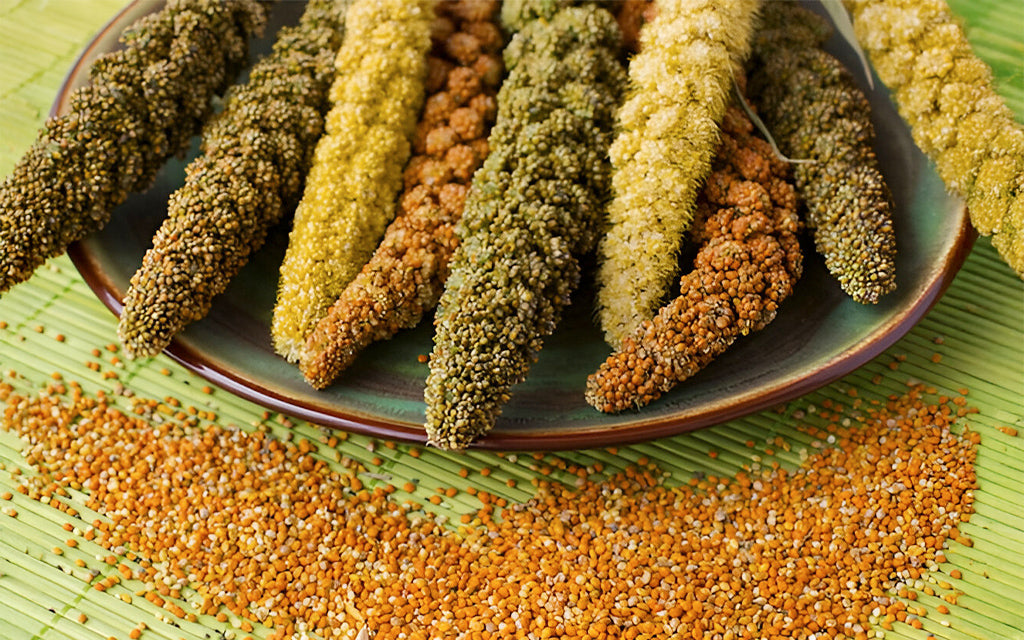
Imagine being surrounded by something that is full of benefits, especially health benefits- Superfood for super healthy! Yes, we are discussing millets, which are gluten-free and ideal for people who suffer from celiac disease or are prone to gluten sensitivities. They can enjoy them with ease.
What are millets?
Nourishing the planet while nourishing your body is something that defines millets most. From ancient times, to your plates, millets can be counted as the most refined group of small seeded cereal grasses that you can find everywhere. Imagine the same grain being used as a food and fodder due to its intense benefits! It has remained a staple food since ancient times, and it seems it has never lost its flow. It can be used solely as an ancient grain in modern recipes.
What makes millets special?
Get back to nature with wholesome millets, something that has been known for ages for their exceptional hardiness and extremely high nutritional density. Rich in dietary fibre and low on the glycemic index, millets have always been a smart choice for a balanced diet. In Asia and Africa, it is still leading as a staple food.
Uniqueness of Millets
While fueling your body naturally, millets can withstand harsh climates and are drought resistance in all the possible ways. Worldwide, it is popular as a sustainable and nutritious grain. Millets belong to the Poaceae family, or the grass family, and this seed looking food has a nutritional profile higher than that of sorghum or any other collective cereals.
In the West, it has become more popular due to its antioxidant properties and usage in several culinary applications. It is rich in vitamins, protein, fibre, and minerals.
How to Use Millets In Regular Life?
Imagine a single product which can be cooked as porridge directly, or it can be ground into flour. This flour can be further used to make cakes, pasta, and bread.
History of Millets
Celebrating diversity in your diet with several varieties of millets in your diet, but do you know how it all started? The references to Shyamaka (barnyard millet) and Priyangava (foxtail millet) are found in our oldest Yajurveda, which indicates their use in almost every past diet and in Indian religious offerings.
Presence of millets can be seen in almost all porridges, about which you have read in almost all old Daadi Maa ki Kahaniya and in several ancient books. It was also used in flatbreads, and several early beers and wines in medieval Europe, especially in Japan and Korea.
In the land of India, millets have always been regarded as the first crops to be domesticated. The basic reason behind it is the hidden fact that it can be grown in areas with limited water availability.
rchaeological Evidence of Millets
Several millets are dated back to 8350-6750 BCE, especially foxtail and proso millets in northern China and have come with archaeological proofs. It became the staple food for the civilisation before wheat and rice emerged for mankind.
Travelling back to the Harappan civilisation around 2500 BCE, the cultivation of millets is supported by archaeological evidence in the Indian subcontinent.
Where is Millet Grown?
More than 130 countries grow millets and have been an important part of their diets across Asia and Africa for centuries.
Government Role In Growing Millets in India
Millets have always played a significant role in nurturing health, increasing farmers' incomes, and ensuring food and nutritional security. The government of India had also focused on and emphasised the cultivation of millets. A few years back, in April 2018, millets were labelled as Nutri Cereals. This was the same year that it was declared the National Year of Millets. It was done to promote the use of millets worldwide in the present generation. The focus was also on assessing the potential future use of millets in food science.
Types of Millets- Usage
Pearl Millet
You may not have heard about pearl millet, but what if I say it is bajra? Scientifically regarded as Pennisetum glaucum or Cenchrus americanus, bajra possesses an earthy flavour. It is rich in iron and is widely used for rotis in winter. You need to try the ancient recipe of bajra porridge.
History of Bajra
Taking it back in history, it is regarded as an ancient grain from Asia and Africa, with evidence dating back to prehistoric times. If you go to the Sahel region of Africa, you will still find it domesticated there.
Usage of Bajra
Presently, bajra is used in several recipes, but it has its original roots somewhere, kneaded in bhakri, or roti, and porridge. The most popular one is the Tamilian one, where this porridge is labelled as Kamban choru or Kamban koozh. Don't be surprised if you read bajra as an important ingredient in several recipes, as everyday people are using unique ways to use it in new recipes to enjoy the features of this grain. If you travel to Namibia, you will find a rare drink named Ontaku or Oshikundu, which is nothing but a fermented form of bajra.
Sorghum
Scientifically regarded as Sorghum bicolor, Sorghum has crossed a long way. Regarded as a powerhouse of nutrition and a supergrain, it is indeed a versatile crop. It is regarded as a pro planet protein source and can be grown as a sweet crop, grain, or forage. Yes, you read it correctly! Check the list of the top five cereal crops in India, and you will be surprised to know that Sorghum is one of them. If you are still confused about why you haven't heard of it, it is the same jowar that you might have substituted with wheat in your kitchen.
History of Sorghum
It is the oldest cereal grain, with its existence dating back to 8,000 BC. It was originally domesticated in northeastern Africa. Later, due to its extreme tolerance towards heat and drought, this grain travelled globally through ancient trade routes. Presently, the United States ranks as the world's largest producer of this grain, having produced a remarkable 373 million bushels in 2020. In India, it is cultivated in Maharashtra and Karnataka, and universally it is grown in Central America, Africa, and South Asia.
Usage of Sorghum
It had been a dietary staple for a long time and had been used for livestock feed and as a sweetener in several places, including India, Africa, and China. It is gluten free and has a moderate taste. Talking about its versatility, rotis, porridges and several other recipes can be prepared by it. Recently, in several places, it has surpassed wheat as a true substitute for baking. People also ground it to make a sweet syrup. Nowadays, it is used for ethanol production and as a fodder.
Finger Millet- Ragi
Scientifically regarded as Eleusine coracana, finger millet has the maximum amount of calcium in it. Known as ragi in common households, it is a nutrient-dense grain with a high amount of minerals, vitamins, and dietary fibre. It helps in overall well-being. Filled with iron, antioxidants, and calcium, it helps the body in several ways. It has a low glycemic index and is known for boosting immunity. It is a very hardy cereal and might help with good digestion. To your surprise, even if you sow the seed in poor soil or harsh climatic conditions, it will survive.
History of Ragi
Ragi originated from the East African highlands and was widely grown in South Asia. You can find them especially in Nepal and India. It can be seen easily growing in semi arid and arid regions. Its existence is dated back to 3000 BCE in the East African highlands, namely Uganda and Ethiopia. It may have been the ancient trade routes or early maritime trade that had brought it to the land of India.
Usage of Ragi
It is used in making several types of staple foods, be it roti, porridge, or even fermented beverages. It has deep cultural roots and is known to help with weight management. People also claimed their skin felt better and healthier after consuming it. It is also used in preparing dosas. At some places, it is also used as baby food. In cake preparation, it is also used. Walk in Nepal, you will find that its flour is fermented and a special beer is prepared from it. The stalk is also used as fodder.
Foxtail Millet- Kangni
Scientifically known as Siteria itelica, Foxtail millet has been a high source of protein with an extremely sweet taste. Kind of unique for its sweetness, this grain is popular as Kangni in Indian households. Its texture is soft, and it is widely used as a substitute for rice. In healthy meals, you will find its role in dosa batters or in your breakfast bowl. It is the second most popular grown millet in the world and is cultivated in Asia. Rich in Vitamins A and E, potassium, fibre and phosphorus, you will find them in several types of rotis, cakes and lemon rice. In South India, besides lemon rice, it is also used to make foxtail millet kheer dessert.
Little Millet- Kutki
In today's world, where digestion is a very big problem, people look for alternatives that can help with easy digestion, and this grain exactly does that. Scientifically regarded as Picrorhiza Kurroa, kutki is sometimes considered the right substitute for white rice. At some places, it is also consumed during Vrat. Upma, pulao, and several other things can be made with it. It is widely grown in the temperate climates of South Asia, India, China, and the Caucasus. If any area experiences low rainfall, it can be grown there with ease. At several places, it is served for breakfast or as a proper meal.
Kodo Millet
It is rich in fibre but is completely neutral in taste- yes, we are discussing kodo millet. Scientifically regarded as Paspalum scrbiculatum L, kodo millet belongs to the Poaceae, a grass family. It is an ancient grain that can even withstand drought and is grown in parts of West Africa and across the Indian subcontinent. You will find them in several curd rice pattern dishes. Kheer is also made with it. Originating in West Africa, you can now find them in Nepal, India, Vietnam, the Philippines, Indonesia, and several other places. It is a versatile millet, and people use the ground form of kodo millet to make dosa, pongal, khichdi, porridge, noodles, biscuits, and snacks.
Barnyard Millet
Belonging to the Poaceae group, barnyard millet is divided into two species, namely, Indian Barnyard Millet and Japanese Barnyard Millet. Scientifically, Indian Barnyard Millet is known as Echinochloa frumentacea, and Japanese Barnyard Millet is called Echinochloa esculenta. Barnyard Millet is a completely gluten-free grain. It is easy to cook and is very light. People are seen consuming it during fasting at several places in India. It is versatile in nature when it comes to uses. You will see people using them in making kheer, khichdi, and tikkis.
Porso Millet
Scientifically regarded as Panicum miliaceum, porso millet can be grown even when the water supply is limited. It has several other names, like hog, common millet, or broomcorn. It is greatly resilient and is a short-duration crop. Rich in protein, the hidden sweetness of this millet will surprise you. Commonly used as a porridge ingredient, it is also used in flour texture. This flour is used in baked goods. Today, when most people are being alerted about their health, this millet can be a good addition to overall well-being.
Fonio
Scientifically labelled as Digitaria exilis, Fonio is also popularly known as acha or findi. It is an ancient grain which has a long travelled history. It is highly tolerant of climatic conditions and has origin traces to West Africa. It is a very uncommon variety of black fonio, scientifically known as Digitaria iburua. You will find them in North and West Africa. Full of nutrients, this millet is full of difficulties. It is a less-used cereal crop, but with growing awareness of health, it is promoted highly all around. It is also a versatile product and can be used in breads, cakes, and rolls if used in flour form. You might confuse it with couscous due to the way it is served. Simple to cook with extremely delightful taste, it is worth trying.
Browntop Millet
Scientifically regarded as Urochloa ramosa, browntop millet is drought tolerant, a warm season grass, and is often grown for its forage, soil erosion control, and seeds. It belongs to the Poaceae grass family. Traditionally, it is found in India and is popular as a dessert ingredient. The reason why it is grown is enormous. Similar to the other millets, it is also a superfood and is labelled as a hub of proteins, dietary fibre, healthy fats, and carbs. You can find them being used in several foods, such as snacks and baked goods.
Buckwheat
Scientifically named as Fagopyrum esculentum, buckwheat belongs to the smartweed and knotweed family. It is a pseudocereal. It is used in several Indian households as a staple food during fasting. It is used widely. Do you know that it is a seed and possesses several nutritional properties? Travel to Italy, and you can find buckwheat in pizzoccheri, a whole-wheat pasta. In the north, it is served with too much cheese and cabbage.
Amarnath
Recognised as a millet with 70 species, Amarnath's scientific name is Amaranthus. It is a pseudo grain with its roots in Mexico, Bolivia, Peru, and Guatemala. Do you know that it was once a staple food of the Aztecs? You will find them being consumed by people during the fasting days of Saavan and Navratri. It is highly rich in B vitamins, iron, protein, dietary fibre, zinc, magnesium, manganese, pantothenic acid, and phosphorus. It is completely gluten-free and highly likeable among health-conscious people. One can cook it easily by boiling it. It can be used for baking, popped like popcorn, and not to miss the delicious porridge.
Slow and Steady Millets Might Rule The World
With more people bidding farewell to processed grains and welcoming millets, it is expected that in the near future, people will discover more ways to use them on their food tables. It is versatile and can be put to use in several culinary creations slowly. For a sustainable future, many people claim that millets can bring about a revolution. These are your gluten-free grains that can turn your gut happy. To put it more precisely, it is the right shortcut to reconnect with nature.
Millets have been there as the first food and are still sustaining as a super food. It is expected to grow in use and lifespan as the population grows.
Millets are for everyone, sustain your future with this sustainable grain!
Frequently Asked Questions
What is more beneficial- oats or millets?
Indeed, both are beneficial, but as we all know, oats are processed before usage, so millets are packed with more benefits. They are the unprocessed version of a superfood.
Which is healthier- millets or rice?
Both rice and millets contain carbohydrates, but millets also contain protein, fibre, vitamins, and minerals, whereas rice contains fats and sugar in addition to carbohydrates.
Can I eat millets every day?
If consumed in limited quantities, millets can be consumed frequently. It is rich in several beneficial properties and is therefore recommended in the processed food world.
Who should not eat millets?
Millets are full of benefits, but people who develop some allergies should avoid them. People suffering from serious diseases can only add them to their lives after discussing them with their doctors. A pregnant lady should avoid it too.
Why is it advisable to soak millets before using them?
Millets have phytic acids present in them, and that can only be controlled by soaking them for some time before cooking them. It breaks down this acid, making it easier to digest. It also ensures that consumers can easily absorb all available minerals and nutrients.